May 25, 2025 · by Tidey Ocean Foundation · updated June 11, 2026
What Happens If We Don't Recycle? The Evidence on Plastic, Oceans, and Human Health
Non-recycled plastic has five specific destinations, each with documented consequences. Here is what the data shows about where unmanaged plastic ends up.
The question of what happens if we do not recycle has a specific empirical answer. Non-recycled plastic has documented trajectories and measurable outcomes. The OECD Global Plastics Outlook estimates that 22 percent of all plastic waste generated globally is currently mismanaged, meaning it ends up somewhere other than a functioning landfill or recycling facility. At current production volumes, that 22 percent represents roughly 80 to 90 million tonnes of plastic per year entering the environment without formal management.
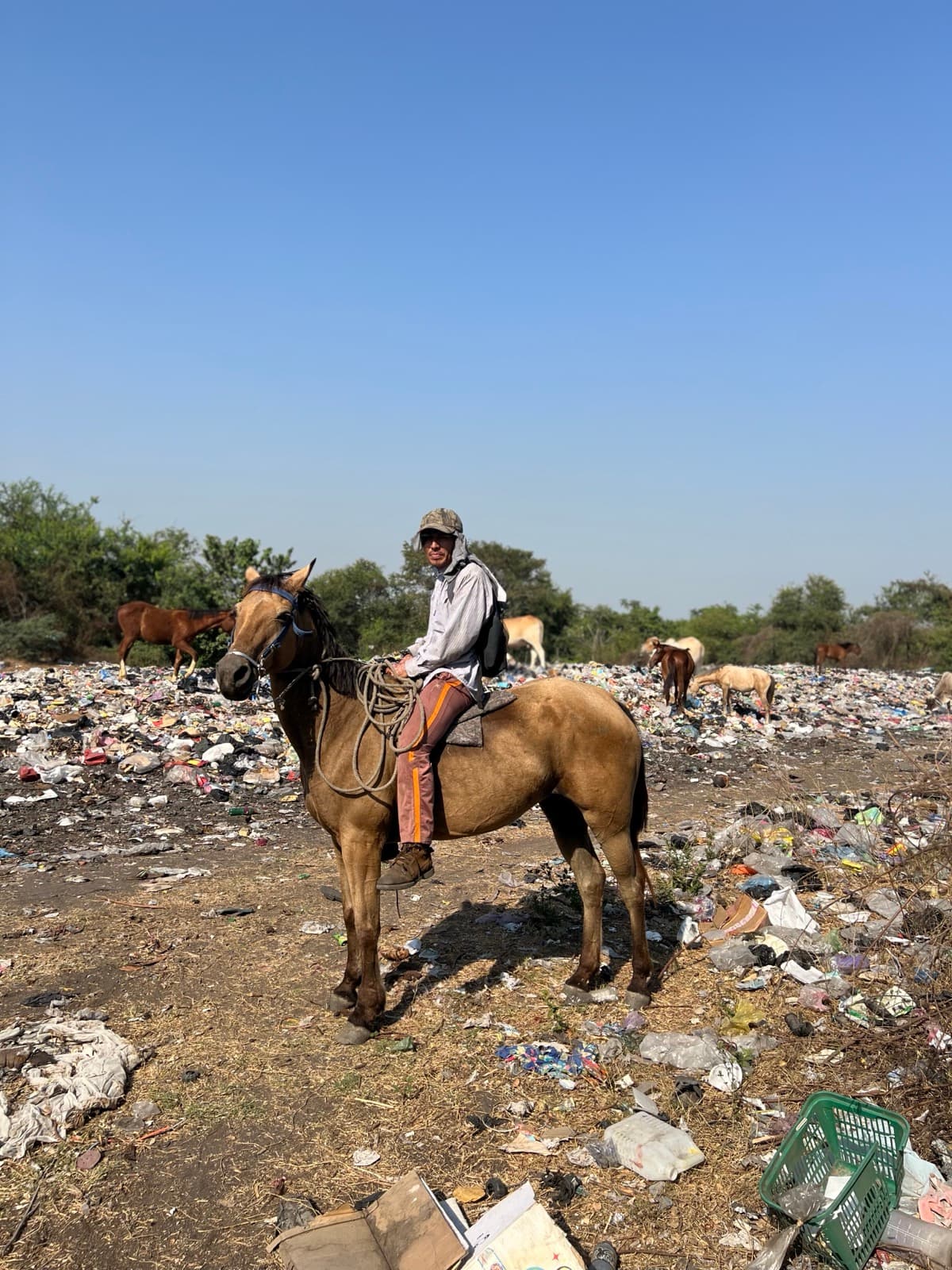
The first destination for mismanaged plastic is open dumps. Communities without formal waste collection commonly use informal land areas, often near drainage channels, for disposal. Open dumps are not engineered landfills: they have no liner, no leachate collection, and no coverage that prevents rain from carrying material into surrounding soil and water. Plastic piled in open dumps migrates into waterways when rain events overflow or erode dump edges. In communities where the dump sits at the top of a watershed, it effectively becomes the contamination source for all drainage downstream. The Great Pacific Garbage Patch does not consist of plastic dropped directly from ships into the ocean. It consists substantially of plastic that moved from open dumps through drainage systems and rivers over years and decades.
The second destination is open burning. In communities without waste collection, burning is often the only available method for volume reduction. UNEP estimates that approximately 12 percent of global plastic waste is burned each year, totaling roughly 50 million metric tons. Research published in PMC estimates that burning one metric ton of plastic generates approximately 2.9 metric tons of CO2 equivalent in an open fire. Burning at low, variable temperatures in open fires also produces dioxins, furans, benzene, and fine particulate matter. The World Health Organization classifies dioxins as Group 1 carcinogens. Communities that burn plastic daily do not do so by preference: they burn because no one comes to collect.
The third destination is waterways. Rain and flooding carry plastic from dumps, roads, and informal disposal sites into drainage systems and rivers. A 2021 study published in Science Advances modeled riverine plastic transport globally and estimated that more than 1,000 rivers account for approximately 80 percent of annual plastic inputs to the ocean, with total riverine emissions between 0.8 and 2.7 million metric tons a year. UNEP estimates that between 19 and 23 million tonnes of plastic leak into aquatic ecosystems each year, a broader measure that counts rivers, lakes, and wetlands alongside the sea. Once in the ocean, that plastic does not stay still. UV radiation and wave action fragment it into progressively smaller particles over time. A 2023 PLOS ONE study analyzing 11,777 ocean sampling stations estimated that more than 170 trillion plastic particles now float at the ocean surface.
The fourth destination is human bodies. Microplastics, the fragmented products of larger plastic items, have been confirmed in human blood in a 2022 study published in Environment International, in brain tissue in a February 2025 study published in Nature Medicine, in placental tissue by researchers at Universita Politecnica delle Marche in 2021, and in lung tissue in multiple studies including research published in Science of the Total Environment. A January 2024 study from Columbia University and Rutgers University published in PNAS found approximately 240,000 plastic particles per liter in bottled water, with 90 percent classified as nanoplastics. The accumulated evidence that plastic particles are present throughout the human body is now robust. What remains under investigation is whether that presence at currently measured concentrations causes disease.
The fifth destination is economic loss. UNEP estimates plastic pollution causes approximately $13 billion per year in damage to marine ecosystems through impacts on fisheries, tourism, and marine biodiversity. Contaminated seafood loses market value. Beaches fouled with plastic debris lose tourism revenue. Coral reef damage reduces the structural habitat that supports fish population recovery. These costs are borne disproportionately by coastal communities in low-income countries that generated the least plastic per capita but bear the closest proximity to the waste.
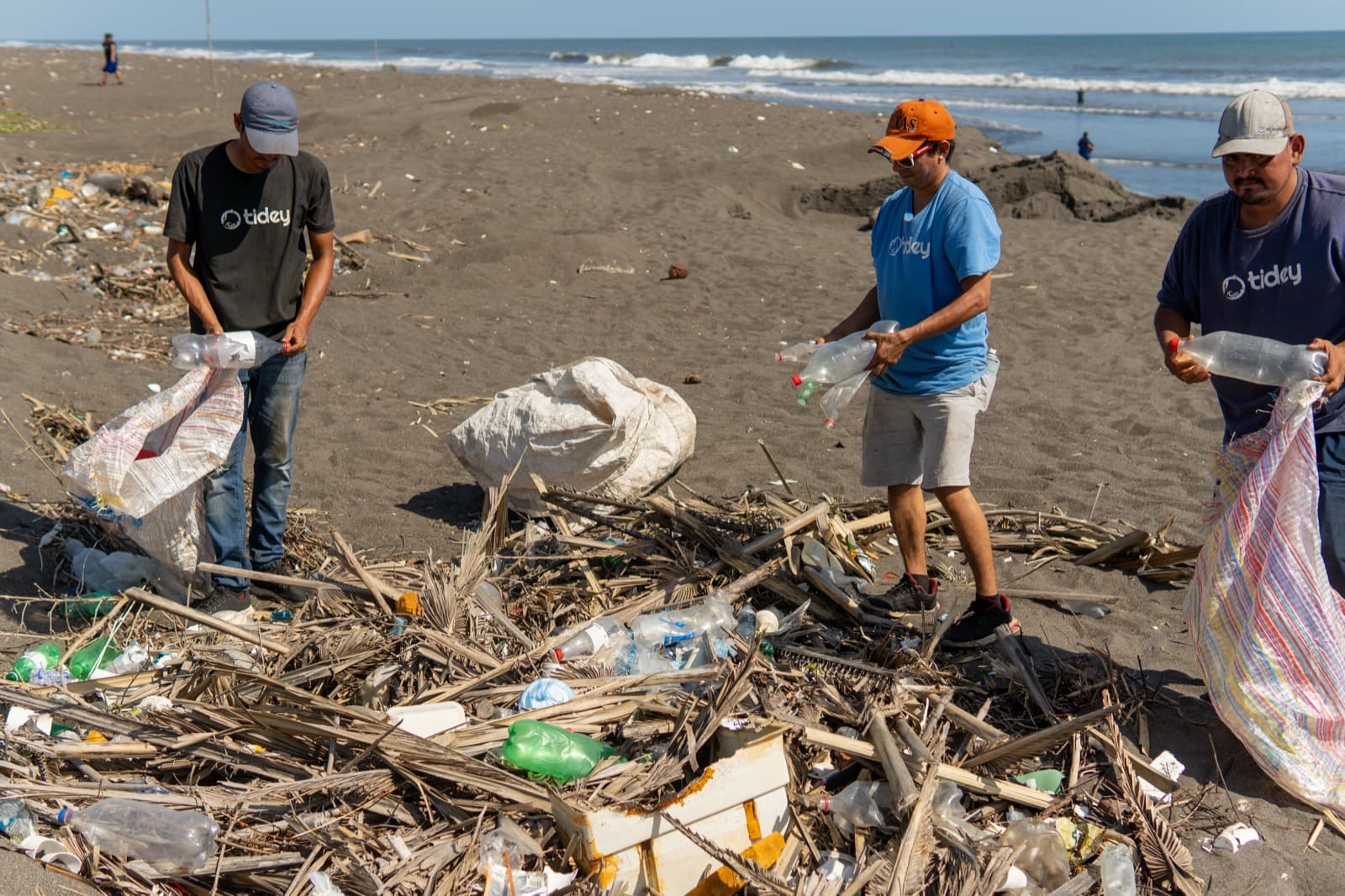
The framing of recycling as purely a behavioral choice misrepresents where the problem sits. In high-income countries with functioning waste infrastructure, an individual decision not to recycle sends a container to landfill rather than a recycling facility. In coastal communities without formal collection, the absence of recycling infrastructure means the alternative to collection is not a landfill but an open dump, a fire, or a river. Tidey Ocean works in the latter context, where collection is the only path that is not one of the five destinations above.
What is the OECD projection for plastic waste if current trends continue?
The OECD Global Plastics Outlook projects that global plastic waste could increase by approximately 70 percent by 2040 compared to 2020 without significant policy intervention. Annual plastic leakage into aquatic ecosystems could approach 40 million tonnes per year by then, compared to the current 19 to 23 million tonnes. The projection reflects economic growth driving higher plastic consumption in rapidly developing economies without a corresponding expansion of waste management infrastructure.
Is landfilling plastic the same as recycling?
No. Landfilling is managed disposal, not recycling. The OECD reports a global plastic recycling rate of approximately 9 percent when recycling is defined as reprocessing plastic into new materials. Landfilled plastic does not re-enter the materials economy, and it remains in the ground for hundreds of years. The 9 percent figure reflects genuine reprocessing; countries that count landfilling in recycling statistics are substantially overstating their actual material recovery rates.
How does Tidey's work change these outcomes?
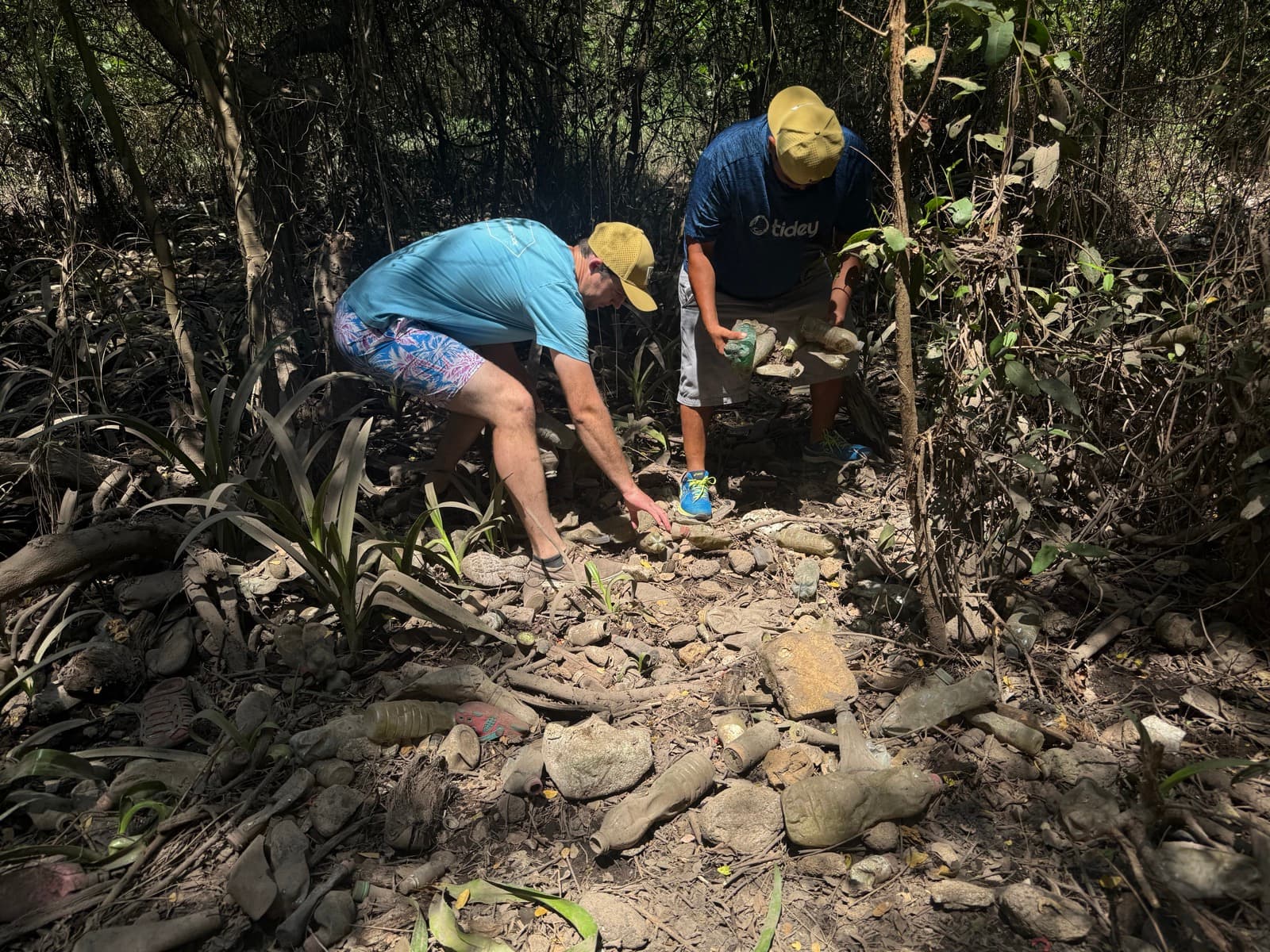
Tidey's collection prevents plastic from reaching three of the five destinations listed above: open burning, waterways, and the ocean. The BanQu verification system provides auditable evidence that collected material is processed responsibly rather than re-dumped. Sending 89.5 percent of collected material on to recyclers means most of what collectors recover enters the materials economy as a recovered raw material rather than waste, reducing demand for virgin plastic production on a pound-for-pound basis.
Sources
- OECD. Global Plastics Outlook: Policy Scenarios to 2060 (2022). https://www.oecd.org/en/publications/global-plastics-outlook_aa1edf33-en/full-report.html
- UNEP. Plastic Pollution and Marine Litter. https://www.unep.org/topics/ocean-seas-and-coasts/ecosystem-degradation-pollution/plastic-pollution-and-marine-litter
- Nihart, A.J. et al. Bioaccumulation of microplastics in decedent human brains. Nature Medicine 31, 1114–1119 (2025). https://doi.org/10.1038/s41591-024-03453-1
Monthly, from the field in Guatemala.
Collection numbers, new research on plastic and health, and what we are learning in the field. No more than once a month.