May 25, 2025 · by Tidey Ocean Foundation · updated June 11, 2026
Which Plastic Resins We Collect and Why Recyclability Matters as Much as Collection
Tidey Ocean collects primarily PET, HDPE, and PP plastics. Here is what happens to each type and why the recycling rate matters as much as pounds.
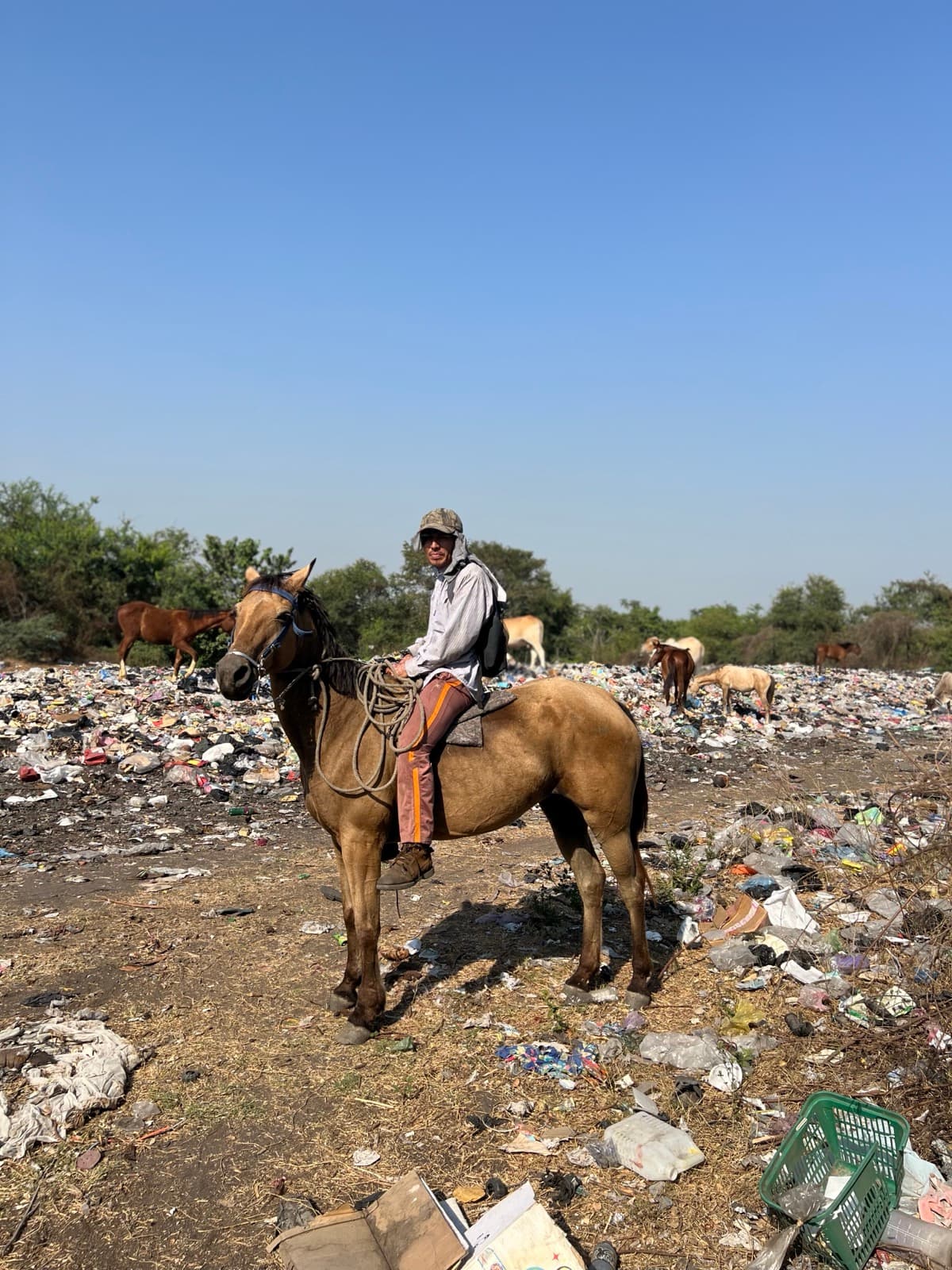
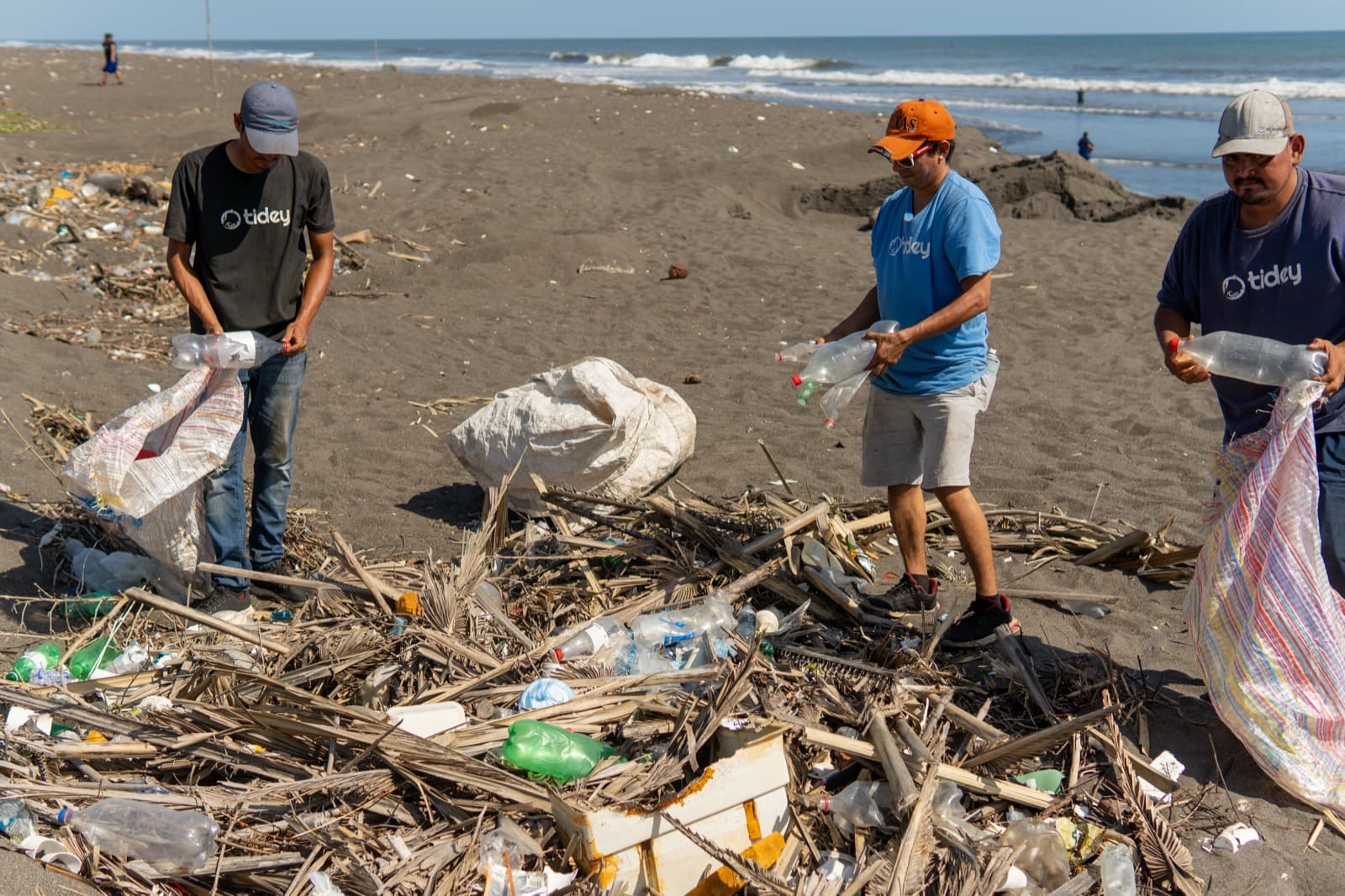
Not all plastic collected from rivers and coastal communities has the same environmental value. The impact of collection depends partly on what happens to the plastic afterward, which depends on what type of plastic it is. Tidey Ocean's network in Guatemala focuses on collecting materials that can be routed to recycling, not just removed from the environment. The difference matters for how impact is counted: a pound of plastic collected and recycled removes that material from both the ocean input stream and the virgin plastic production cycle. A pound collected and landfilled removes it from one stream but not the other.
The primary plastic types Tidey's collectors recover are PET (resin code 1), LDPE and LLDPE film plastic (code 4), and polypropylene (code 5). HDPE (code 2) arrives within mixed loads rather than as a separately sorted stream. These four types represent the vast majority of plastic packaging and single-use items found in Guatemala's coastal communities, and they are the plastic types with functioning recycling infrastructure in the region.
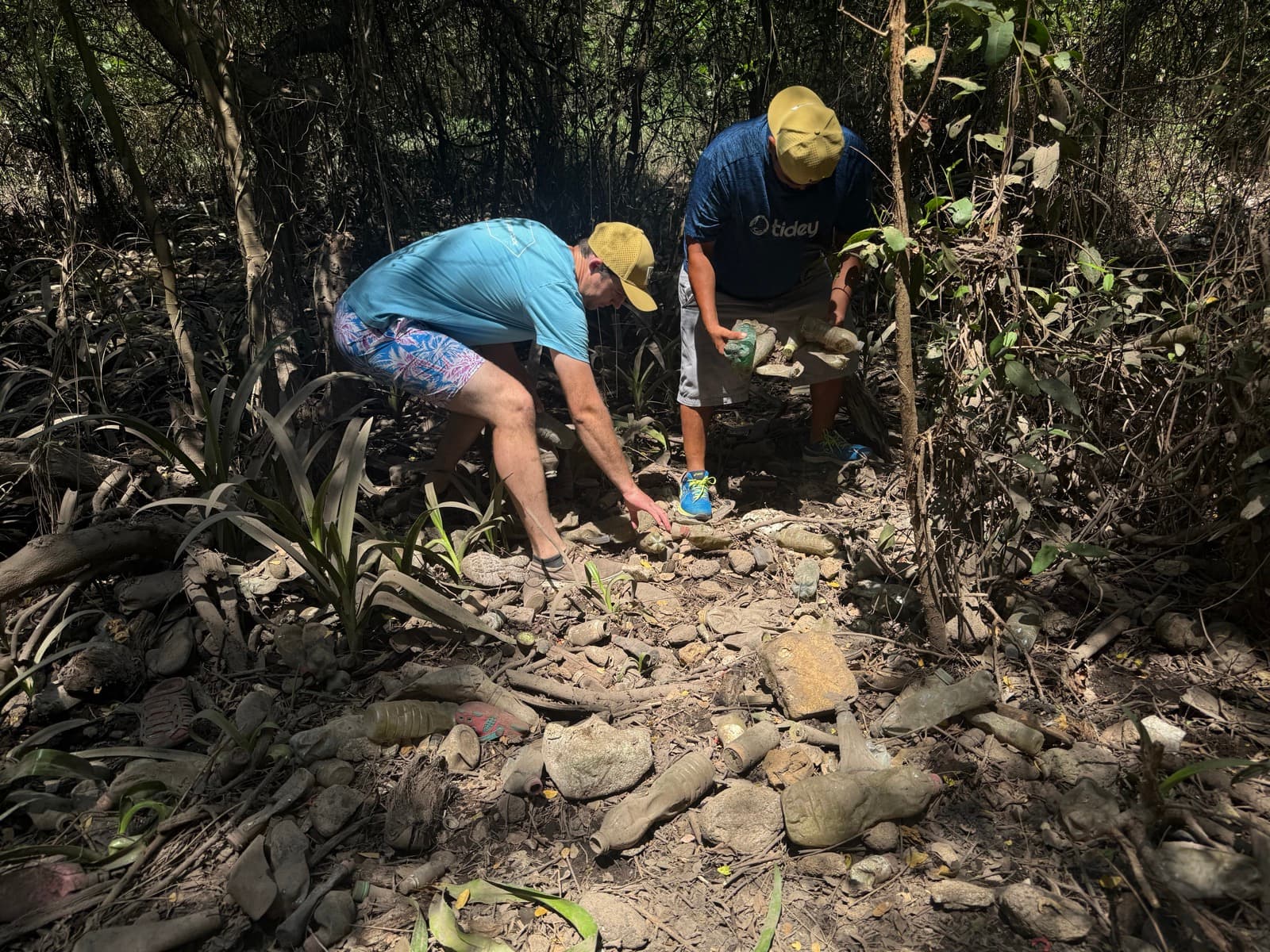
PET, polyethylene terephthalate, is the material in clear beverage bottles: water bottles, soda bottles, and juice containers. PET is the most commonly recycled plastic globally because it has stable market demand from both the beverage industry, which uses recycled PET for new bottles, and the textile industry, which converts recycled PET into polyester fiber. Even bottles that have been weathering on a canal bank retain enough structural integrity to be recycled if they have not been severely degraded. PET is the dominant material in Tidey's collection stream and drives a significant share of the recycled material revenue that helps offset collection costs.
HDPE, high-density polyethylene, covers milk jugs, detergent bottles, shampoo containers, and similar rigid opaque containers. HDPE retains good material properties through the recycling process and has reliable demand in pipe manufacturing, plastic lumber, and new container production. It is less common than PET in coastal litter volume, since beverages dominate plastic packaging, but it represents a consistent share of what Tidey's collectors recover and is consistently recyclable.
Polypropylene covers food containers including yogurt tubs, takeaway containers, and bottle caps, as well as some rigid packaging. PP recycling infrastructure has improved significantly in recent years as demand from automotive and appliance manufacturing for post-consumer recycled PP has grown. In Guatemala, PP processing capacity is available and Tidey routes recovered PP to appropriate facilities alongside PET and LDPE.
LDPE and LLDPE film plastic, which includes plastic bags, stretch wrap, and agricultural film, is more logistically challenging than the rigid plastics above. Film plastic is recyclable but requires a separate collection and processing stream from rigid plastics because it tangles in sorting machinery. Its market value per pound is lower than PET or HDPE. Tidey's sorting process handles film separately and routes it to processors capable of handling film feedstock, keeping it out of the waste stream.
In 2025 these plastic types accounted for about 96 percent of what Tidey's collectors recovered by weight: PET at 48.9 percent, LDPE film at 38.0 percent, and polypropylene at 9.3 percent. The remaining 3.8 percent arrived as mixed material. The material that does not reach a recycler, roughly 10 percent of what we collect, consists of items that cannot be economically recycled under current infrastructure and market conditions: severely degraded plastics that have lost structural integrity, contaminated materials, composite packaging with multiple layers of different polymer types, and plastics like polystyrene that have no viable recycling pathway in the region. That material requires responsible end-of-life management: it goes to licensed waste management facilities rather than being re-dumped or burned.
The share that actually reaches a recycler is part of how Tidey's cost structure works. Revenue from recycled PET, LDPE, and PP creates a partial offset against collection and processing costs. This is one of the practical reasons why river-mouth interception before degradation produces better economics than collecting the same plastic after it has spent time in the ocean: intact recyclable material has market value that partially funds the operation. Plastic that has fragmented into microplastics in the open ocean has no recycling value at all, removing this economic mechanism entirely.
Why does tracking recycling rate matter separately from collection rate?
Collection rate tells you how much plastic was removed from the environment. Recycling rate tells you how much of that plastic re-entered the materials economy as a substitute for virgin plastic production. A collection program with a low recycling rate removes plastic from waterways but does not close the loop: the plastic becomes waste again somewhere downstream. Tracking both figures together gives a complete picture of the impact chain.
What happens to the material that cannot be recycled?
Non-recyclable plastic collected by Tidey is directed to licensed waste management facilities in Guatemala. The goal is to prevent re-entry into the environment through improper disposal or burning. For some non-recyclable materials, waste-to-energy processing is available where facilities meet emission standards. Tidey does not return collected plastic to open dumps or waterways regardless of recyclability, which distinguishes the outcome from the unmanaged disposal that would have occurred without collection.
Does the type of plastic collected affect BanQu verification?
The BanQu blockchain logs the total weight at the point of collection with the collector's name and a timestamp. The polymer-type breakdown happens at the sorting facility, and the recycling rate reflects the aggregate output across all collected material over a reporting period. Individual collection events record total weight rather than polymer composition, which is practical given that collectors bring in mixed loads.
Sources
- U.S. EPA. Plastics: Material-Specific Data. https://www.epa.gov/facts-and-figures-about-materials-waste-and-recycling/plastics-material-specific-data
Monthly, from the field in Guatemala.
Collection numbers, new research on plastic and health, and what we are learning in the field. No more than once a month.