July 30, 2026 · by Tidey Ocean Foundation
We Measured Our Own Carbon Footprint. Here Is What We Found.
Tidey Ocean emitted 13,910 kg of CO2 in 2025 and avoided roughly 229,000 kg by preventing open burning. Here is the full accounting, both sides.
Most organizations that talk about avoided emissions never publish what they emit themselves. We decided to do both.
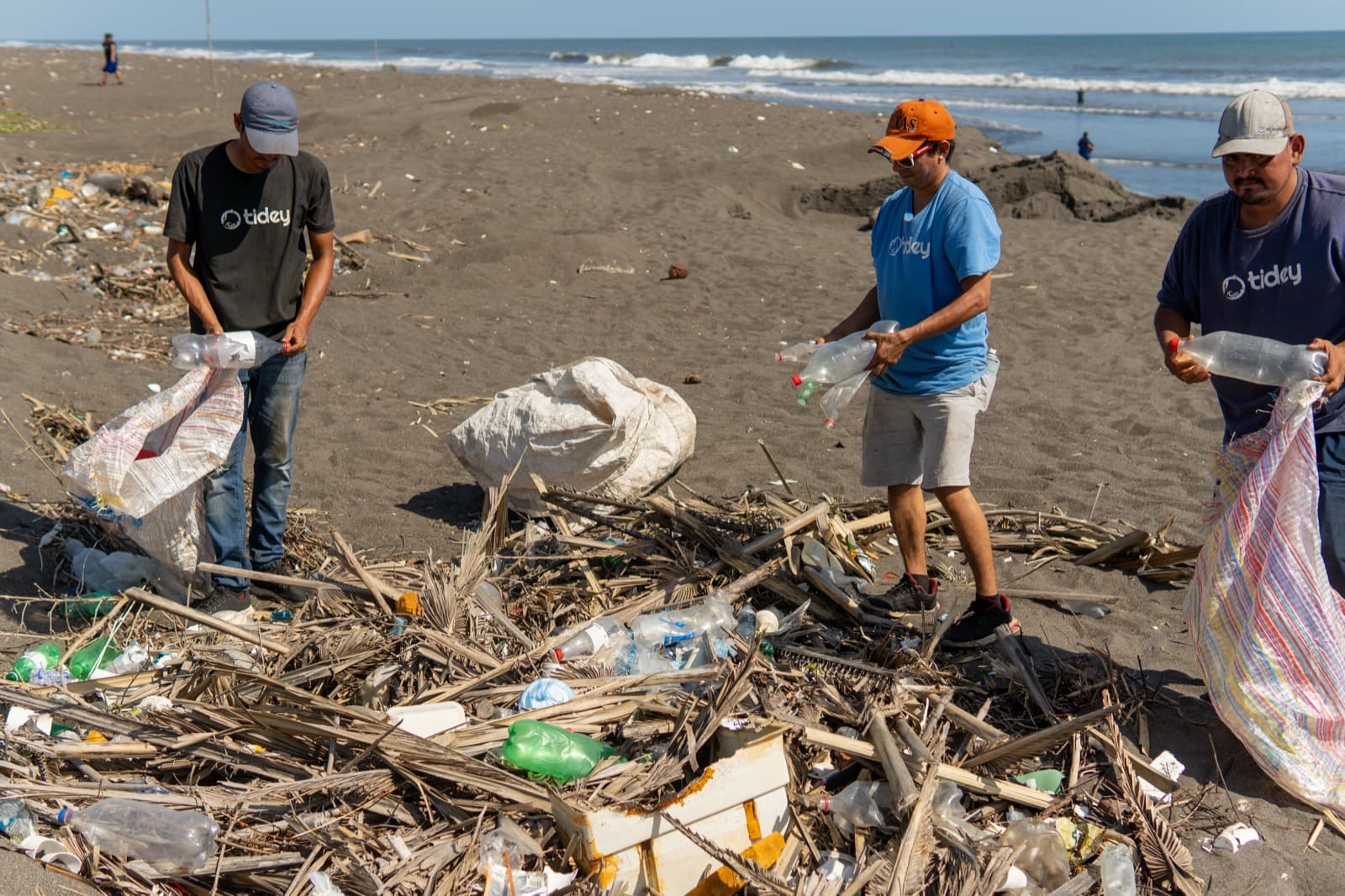
In 2025, Tidey Ocean recycled 311,239 pounds of plastic in Guatemala that would otherwise have been burned or left in the environment. Doing that work took trucks, diesel, electricity, freight, and a handful of flights. We tracked all of it, gallon by gallon and receipt by receipt, and then we did the math. Here is the full picture.
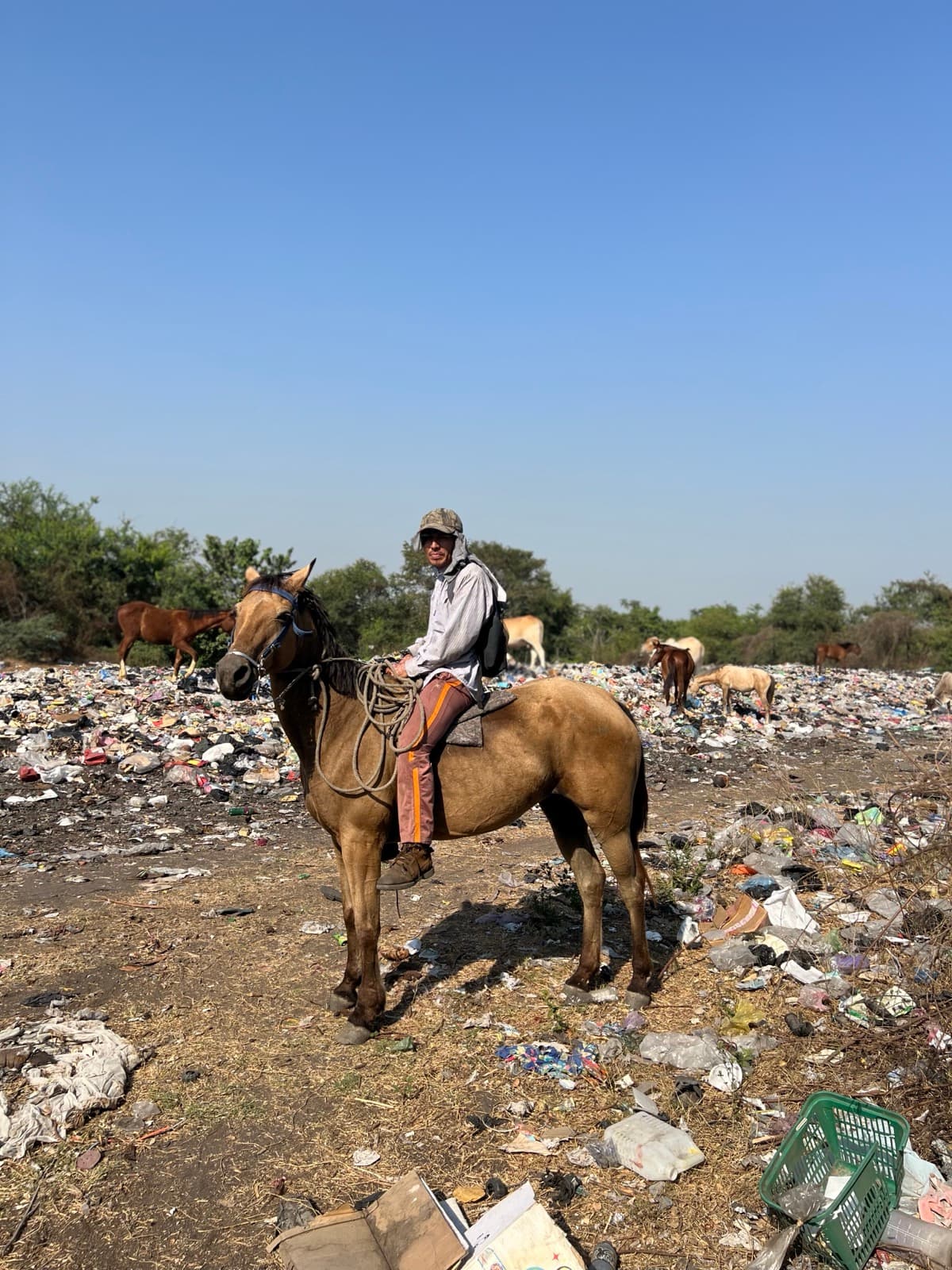
Start with what we avoided. In the communities where we work, roughly 60 percent of household plastic waste is burned in the open. There is no municipal collection to speak of, so burning is simply what happens. It fills the air with toxic smoke and it releases carbon that would otherwise stay locked in the material. Every pound our collectors recover is a pound that does not burn.
Across the plastic we recycled in 2025, that adds up to approximately 229,000 kilograms of CO2 avoided. The figure comes from applying combustion emission factors to each polymer type we collect: PET, LDPE, polypropylene, and the HDPE and other resins that arrive in mixed loads, each of which releases a different amount of carbon when burned. That number is deliberately conservative. It counts only the carbon dioxide from burning. Open burning also releases methane, nitrous oxide, and black carbon, none of which we have claimed credit for.
Now what we emitted, because running a collection operation is not carbon free and we think it would be dishonest to pretend otherwise. Our complete 2025 operational footprint was 13,910 kilograms of CO2 equivalent. Vehicles, meaning gas and diesel, accounted for 7,496 kilograms of that. Flights accounted for 4,024. Freight and hauling added 937. A single air conditioning recharge on a Mazda accounted for 765. Electricity accounted for 688.
We included everything we could measure, right down to that half kilogram of refrigerant. Our flights are in there too, with the additional warming effect of aviation accounted for rather than just the fuel burned.
The net picture is this. For every kilogram of CO2 our operations put into the atmosphere, our recycling work keeps more than sixteen out of it. Every pound of plastic we recycle leaves the atmosphere 0.69 kilograms of CO2 better off. Put another way, our operational footprint costs 0.045 kilograms of CO2 equivalent per pound recycled, and the avoided burning is roughly sixteen times larger. The work pays for itself in carbon terms many times over, and that ratio improves every time we make our routes more efficient or move more material per trip.
There is a second climate benefit to this work that we have deliberately left out of our numbers. When recycled resin goes into a new product, it displaces virgin plastic that would otherwise have to be manufactured from petroleum. Virgin PET carries a footprint of roughly 2.15 kilograms of CO2 equivalent per kilogram against about 0.9 for mechanically recycled PET, and the gap is similar for the polyethylenes. Across the material we recycled in 2025, that displacement is worth somewhere in the range of 180,000 kilograms of CO2 equivalent, which would nearly double the figure above.
We are not counting it, for two reasons. The recyclers who process our material and the brands who buy it have a fair claim to that benefit, and it should be counted once, not twice. And recycled resin does not always replace virgin material one for one in the market, so the real figure depends on assumptions we cannot verify from where we sit. We would rather report a number we can stand behind completely than a larger one we would have to defend.
For the same reason, we have ignored the small amount of methane and ethylene that plastic releases as it degrades in sunlight. It is a real effect, but across our volume it works out to roughly 130 kilograms of CO2 equivalent per year, which is smaller than the uncertainty in everything else we have measured.
Why publish this at all? Two reasons. The first is that carbon claims are easy to make and hard to check. Plenty of organizations publish an impressive avoided emissions number without ever showing the other side of the ledger or explaining where the factors came from. We would rather show our work, including the parts that are less flattering, so that funders and partners can judge the numbers for themselves.
The second is that measuring changed what we do. Once you can see that your diesel truck is the single largest line in your footprint, route efficiency stops being an abstract goal. In 2025 we cut our operational cost per pound collected by 34 percent. Those same efficiency gains lower our emissions per pound, and having the measurement in front of us makes the next round of improvements easier to find.
How did we calculate it? We want anyone to be able to check this. Fuel emissions use US EPA factors of 8.89 kilograms of CO2 per gallon of gasoline and 10.18 kilograms per gallon of diesel, applied to actual fuel purchases converted from Guatemalan quetzales at documented prices. Electricity uses Guatemala's grid intensity of 0.272 kilograms of CO2 per kilowatt hour. Global warming potentials for refrigerants follow IPCC AR6. Avoided emissions are calculated using combustion factors specific to each polymer, applied to net recycled weight after a contamination adjustment for dirt and moisture.
Our collection tonnage is tracked through BanQu blockchain records, delivery by delivery, which is what let us break the avoided emissions figure down by plastic type rather than estimating an average.
One thing to note: these two figures are not measured the same way. Our own emissions are reported as carbon dioxide equivalent, which includes methane, nitrous oxide, and the additional warming effect of aviation. Our avoided emissions count carbon dioxide only. Open burning also releases methane, nitrous oxide, and black carbon that we have not counted, so the real net benefit is larger than what we have published here. We would rather understate it.
We are a small organization and this is our first full year carbon inventory. It has not been independently audited. If you spot something you would calculate differently, we would like to hear from you at jeremy@tideyocean.org.
What comes next? Our goal for 2026 is one million pounds of plastic collected. If we hit it while holding our current recycling rate and operational efficiency, the avoided carbon figure grows to roughly 577,000 kilograms, about two and a half times what we recorded in 2025. We will publish those numbers too, whatever they say.
Sources
- US EPA. Greenhouse Gas Emission Factors Hub. https://www.epa.gov/climateleadership/ghg-emission-factors-hub
- IPCC. Sixth Assessment Report (AR6), global warming potentials. https://www.ipcc.ch/assessment-report/ar6/
Monthly, from the field in Guatemala.
Collection numbers, new research on plastic and health, and what we are learning in the field. No more than once a month.