May 25, 2025 · by Tidey Ocean Foundation · updated June 11, 2026
The 7 Types of Plastic: What the Resin Codes Mean and Which Ones Actually Get Recycled
The number on a plastic container identifies the polymer type, not its recyclability. Here is what each of the 7 resin codes actually means.
The number inside the triangle on the bottom of a plastic container is not a recycling symbol. It is a resin identification code. The chasing-arrow triangle suggests recyclability, but the code inside identifies the polymer type, and the relationship between polymer type and actual recyclability is far weaker than most consumers assume.
The resin identification code system was established in 1988 by the Society of the Plastics Industry, now known as PLASTICS, to help materials recovery facilities sort plastics after collection. There are seven codes. What the system was never designed to do is tell consumers which plastics will actually be recycled. That distinction depends on local collection infrastructure, processing facility capacity, and whether there is a market for the recovered material. Only two of the seven types are reliably recycled at commercial scale in most countries. A third is growing in infrastructure. The other four have limited or no viable recycling pathways in most markets.
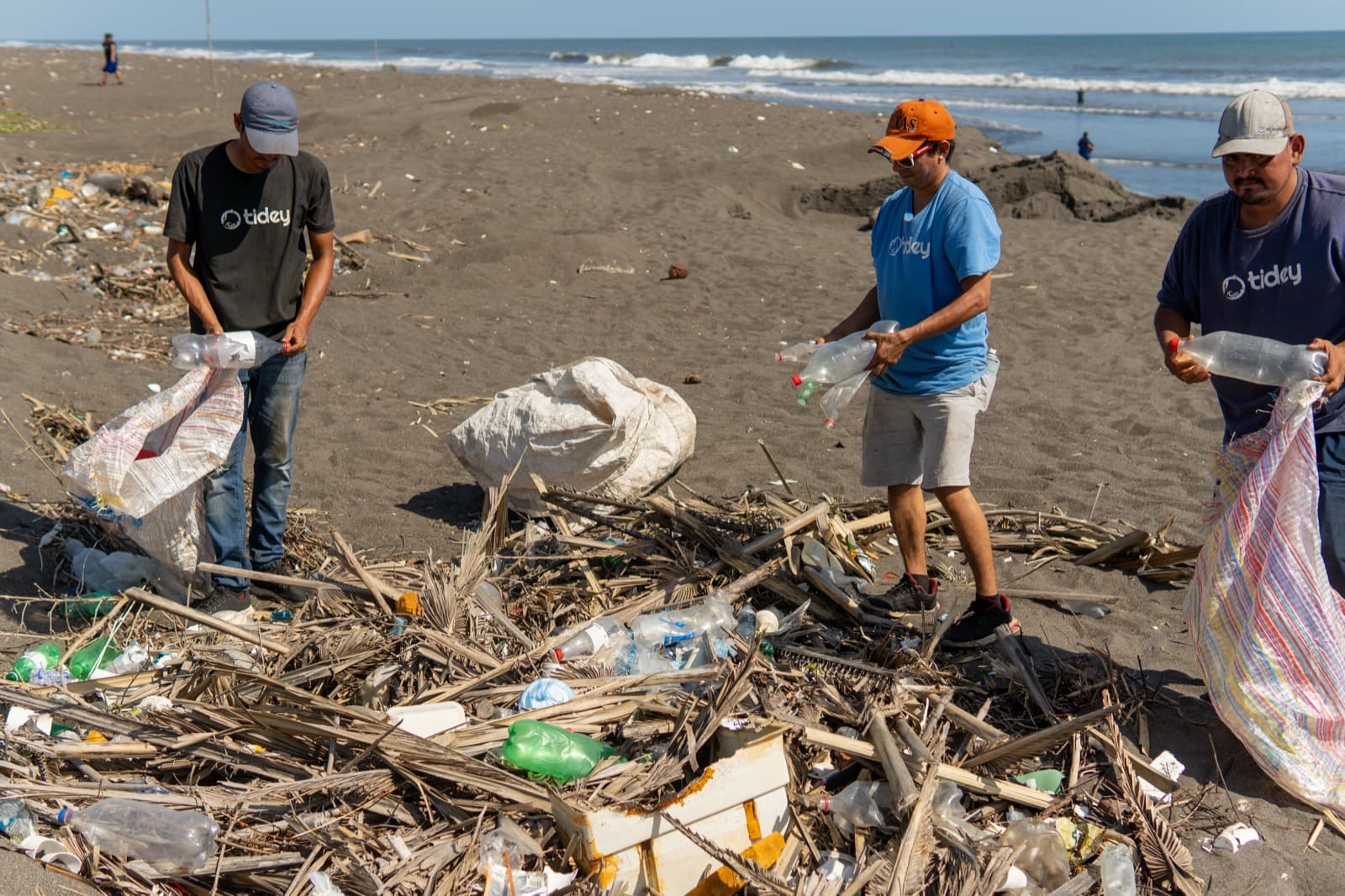
Resin code 1 is PET, polyethylene terephthalate. It is used for clear beverage bottles, food containers, and, when spun into fiber, polyester textiles. PET is the most commonly recycled plastic globally. Its recycling value is supported by demand from the beverage industry, which uses recycled PET to make new bottles, and from the textile industry, which uses it as polyester fiber feedstock. In the United States, approximately 27 percent of PET bottles are recycled, making it the most-recycled plastic by volume. PET retains reasonable quality through the recycling process, though it loses some structural integrity with each cycle. In Tidey Ocean's collection network in Guatemala, PET bottles are the dominant recyclable material our collectors recover.
Resin code 2 is HDPE, high-density polyethylene. It is used for milk jugs, detergent bottles, shampoo containers, and some grocery bags. HDPE is the second most reliably recycled plastic, with well-established market demand for recovered material used in pipes, plastic lumber, and new containers. Its strength and heat tolerance mean it retains good material quality through the recycling process. HDPE reaches Tidey's collection stream within mixed loads rather than as a separately sorted category.
Resin code 3 is PVC, polyvinyl chloride. It is used in pipes, window frames, flooring, and medical tubing. PVC contains chlorine and, in older formulations, lead-based stabilizers and phthalate plasticizers, all of which complicate recycling and create toxic byproducts if incinerated at low temperatures. Most municipal recycling programs do not accept PVC. Specialty recycling for PVC pipes and construction-grade PVC exists in some markets, but household PVC rarely enters the recycling stream.
Resin code 4 is LDPE, low-density polyethylene. It is used for plastic bags, stretch film wrapping, and squeezable bottles. LDPE is technically recyclable but is rarely accepted in curbside programs because film plastic tangles in the conveyor belts and sorting machinery at most materials recovery facilities. Some grocery retailers and specialty collection points accept plastic film for separate processing. The recovered material has lower value than PET or HDPE. Tidey's sorting process handles LDPE and LLDPE film separately from rigid plastics and routes it to processors capable of handling film feedstock.
Resin code 5 is polypropylene. It is used for yogurt containers, food storage containers, bottle caps, and straws. PP recycling infrastructure has expanded in recent years as demand for recycled polypropylene has grown in automotive, appliance, and industrial manufacturing. In some markets PP is now accepted in curbside programs, but acceptance is inconsistent globally. Tidey collects PP as part of its recyclable stream, primarily as agricultural string, and PP represents the third largest recyclable category in our collection after PET and LDPE film.
Resin code 6 is polystyrene. It is used for foam coffee cups, foam takeout containers, and foam packing materials. Polystyrene is very rarely recycled commercially because it is lightweight and bulky, making transport costs high relative to its material value. It also degrades into small particles readily in the environment, contributing to ocean microplastics as it weathers. Most jurisdictions do not accept polystyrene in recycling programs, and several countries and US states have moved to ban expanded polystyrene food service items.
Resin code 7 is a catch-all for polycarbonate, nylon, acrylic, and mixed-polymer materials that do not fit the first six categories. Recycling for code 7 materials is uncommon and highly dependent on the specific composition. Polycarbonate, the most common code 7 material in consumer products, contains BPA in older formulations. Code 7 items are generally not accepted in recycling programs.
In practice globally, PET and HDPE account for the overwhelming majority of plastic that is actually recycled. PP recycling is growing. PVC, LDPE, PS, and code 7 materials together represent a very small fraction of recycled plastic despite appearing in recycling symbol triangles on product labels. The symbol does not mean this item will be recycled. It means this polymer type could theoretically be recycled if the right infrastructure, collection, sorting, processing, and end market exists at scale in your specific location.
What happens to plastic that is not recycled?
It goes to one of three destinations: landfill, incineration or open burning, or the environment through leakage from waste management systems. The OECD estimates that 22 percent of global plastic waste is mismanaged, ending up in open dumps, burned, or washed into waterways. That percentage represents roughly 80 to 90 million tonnes per year at current production volumes.
Why does Tidey Ocean focus on PET, LDPE, and PP?
These are the plastic types with established recycling markets that produce real demand for recovered material. Recovering them before they enter waterways and degrade into microplastics maximizes two outcomes simultaneously: plastic is removed from the ocean input stream, and the material retains enough quality to enter the recycling market. Revenue from recycled material helps offset the cost of collection. Plastic that has spent time in the ocean or in waterways loses its polymer integrity and cannot be economically recycled.
Sources
- U.S. EPA. Plastics: Material-Specific Data. https://www.epa.gov/facts-and-figures-about-materials-waste-and-recycling/plastics-material-specific-data
- U.S. EPA. Reduce, Reuse, Recycle. https://www.epa.gov/recycle
Monthly, from the field in Guatemala.
Collection numbers, new research on plastic and health, and what we are learning in the field. No more than once a month.