May 25, 2025 · by Tidey Ocean Foundation · updated June 11, 2026
The Plastic Problem in Fast Fashion: What the Numbers Show
60 percent of clothing is made from plastic fibers. Here is what that means for ocean microplastics, textile waste, and why it is hard to fix.

Sixty percent of the material made into clothing today is plastic, according to UNEP. That statistic reframes what fast fashion means as an environmental problem: it is not only a labor story or a carbon story. It is also a plastic pollution story, with direct consequences for ocean microplastics that most clothing buyers have no awareness of.
The materials are primarily polyester, acrylic, and nylon, all petroleum-derived polymers. Global fiber production hit a record 132 million tonnes in 2024, up from 125 million tonnes in 2023. Polyester alone accounts for 59 percent of all fiber produced globally, and 88 percent of that polyester is fossil fuel-based rather than recycled, according to industry production data. The combination of volume and polymer chemistry creates a microplastic problem that operates through two separate pathways: use and disposal.
The use pathway operates every time synthetic clothing is washed. A single laundry load can release up to 700,000 microfibers into wastewater, with the quantity depending on fabric type, machine type, water temperature, and cycle length. UNEP estimates that washing synthetic clothing releases roughly 500,000 tonnes of synthetic microfibers into ocean systems annually, equivalent in plastic mass to approximately 50 billion plastic bottles. Most wastewater treatment plants capture a significant share of these fibers, but the fraction that escapes goes directly to rivers and the ocean. Textiles account for an estimated 20 to 35 percent of all ocean microplastics, according to UNEP, making fashion the single largest source of ocean microplastic pollution by fiber count.
A study analyzing Arctic Ocean water samples found that polyester fibers comprised approximately three-quarters of all microplastics detected. The Arctic Ocean does not have fast fashion manufacturing nearby. The fibers arrived via ocean circulation from lower-latitude sources, demonstrating that synthetic textile microplastics disperse globally over time and do not remain in the regions where clothing is manufactured or worn.
The disposal pathway compounds the use pathway. The Ellen MacArthur Foundation has documented that fewer than one percent of all clothing produced globally is recycled into new clothing. Of discarded textiles, roughly 80 percent go to landfills or incineration, 12 percent to secondhand markets, and less than one percent back into fabric production. Globally, an estimated 92 million tonnes of textile waste are produced each year, a figure that may have reached 120 million tonnes in 2024 based on current production trajectories. In the United States alone, EPA data documents that textile waste exceeds 11 million tonnes per year. That volume, predominantly polyester and other synthetics, goes to landfills where the material will not biodegrade for an estimated 200 or more years, or to incineration where it becomes emissions.
The fast fashion business model is designed to maximize turnover. The average garment is now worn approximately 7 to 10 times before disposal. Fast fashion brands produce 80 to 100 billion garments annually, according to Ellen MacArthur Foundation research. The combination of low per-garment cost, rapid trend cycling, and short use-life creates a throughput rate that waste management systems were not built to handle.
What can consumers actually do?
Choosing natural fiber textiles, cotton, wool, linen, and silk, eliminates the synthetic microplastic shedding problem at the point of use. Buying secondhand extends the life of existing garments without generating new production demand. Microfiber filter bags for washing machines and dryer lint filters designed for synthetic fibers capture a portion of fibers before they reach wastewater. Washing synthetic garments less frequently, at lower temperatures, and on shorter cycles reduces per-wash fiber release. Prioritizing quality and durability over novelty slows the disposal rate.
The structural change that would most reduce fashion's plastic contribution is a shift in fiber composition at the production level: a substantial reduction in the share of fossil fuel-based polyester in new garments, paired with real end-of-life recycling infrastructure. Fiber-to-fiber textile recycling, where worn clothing becomes new fabric rather than downgraded industrial rags, exists at small scale and is growing, but the volume is a fraction of what would be needed to offset current production rates. Recycled polyester still sheds microfibers during washing, meaning it addresses the fossil fuel dependency without resolving the microplastic shedding issue.
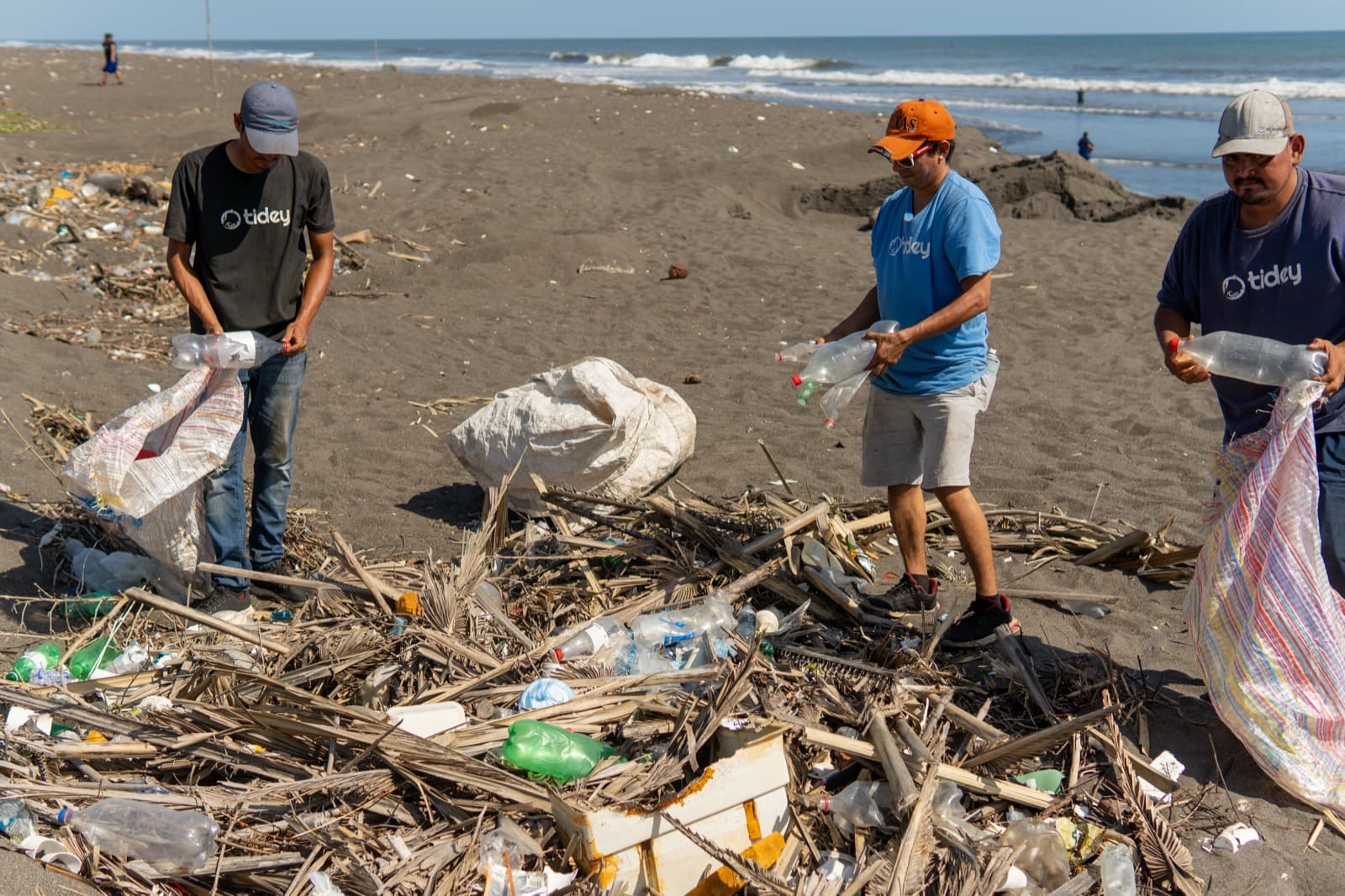
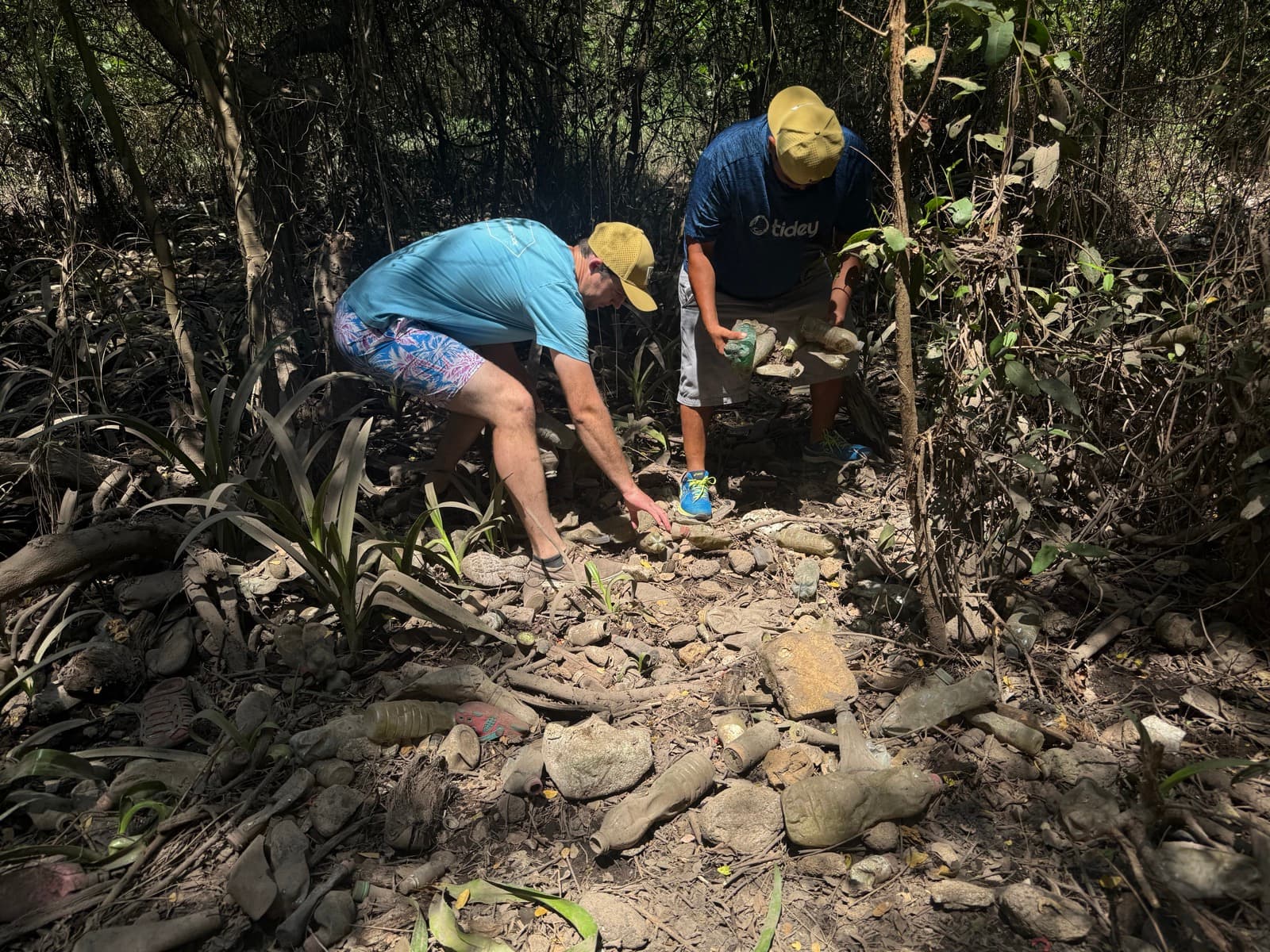
Tidey Ocean's collection work is relevant here in a specific and limited way. Synthetic microfibers are too small and too dispersed to intercept at river mouths through community-based collection. By the time a polyester fiber has passed through a wastewater system and entered a river, it is already at microplastic scale. The plastic we can intercept is whole or partially degraded macro-plastic: bottles, film, packaging, and rigid containers. The fiber problem in fashion requires upstream intervention at the production and use stage, not downstream cleanup. That is why policy pressure on fiber composition in new garment production is the most direct lever available for reducing the fashion sector's contribution to ocean microplastics.
How much of ocean microplastic pollution comes specifically from synthetic textiles?
UNEP estimates textiles account for 20 to 35 percent of ocean microplastics, making them the largest single source category on a particle-count basis. Most studies that attempt to quantify the textile fraction use fiber morphology, distinguishing long, thin, elongated particles that resemble synthetic textile fibers from fragmented film or pellet-type particles. The Arctic Ocean sampling data, which found polyester fibers comprising three-quarters of microplastics in remote water samples, suggests the textile fraction may be at the higher end of that range in open ocean environments far from land-based debris sources.
Sources
- UNEP. Plastic Pollution and Marine Litter. https://www.unep.org/topics/ocean-seas-and-coasts/ecosystem-degradation-pollution/plastic-pollution-and-marine-litter
- OECD. Global Plastics Outlook: Policy Scenarios to 2060 (2022). https://www.oecd.org/en/publications/global-plastics-outlook_aa1edf33-en/full-report.html
Monthly, from the field in Guatemala.
Collection numbers, new research on plastic and health, and what we are learning in the field. No more than once a month.