May 25, 2025 · by Tidey Ocean Foundation · updated June 11, 2026
How Plastic Reaches the Ocean, and Where to Stop It
Rivers carry 0.8 to 2.7 million metric tons of plastic to the ocean each year. Here is how that happens, and why stopping it at the source costs less.
The world produces more than 430 million tonnes of plastic every year, according to the United Nations Environment Programme (UNEP, 2024). Two-thirds of that is short-lived packaging and single-use items that become waste within months. A fraction of that waste is properly collected, sorted, and recycled. Most of the rest ends up somewhere it was never meant to go.
Global plastic waste generation has nearly doubled in two decades, from roughly 180 million tonnes annually in 2000 to an estimated 400 million tonnes by 2024, according to the OECD Global Plastics Outlook. About 22 percent of all plastic waste generated worldwide is mismanaged, meaning it is openly dumped, burned, or left to enter waterways rather than collected and contained. In developing nations, that share is far higher. Nigeria mismanages an estimated 87.5 percent of its plastic waste. Indonesia, 43.8 percent. India, 68.6 percent. These are not failures of individual behavior. They are failures of infrastructure.
The pathways from land to ocean are well documented. Plastic that reaches a river will almost certainly reach the sea. A landmark study published in Science Advances (Meijer et al., 2021) modeled riverine plastic emissions globally and found that more than 1,000 rivers account for 80 percent of annual plastic inputs to the ocean, with total emissions estimated between 0.8 and 2.7 million metric tons per year. Earlier research assumed a handful of large rivers in Asia drove most of the problem. The 2021 model showed the reality is more distributed: small urban rivers in coastal cities rank among the worst emitters, because they move fast, they flood easily, and there is little to no infrastructure intercepting waste before it drains to the coast.
The geography of this problem is not evenly shared. Asia accounts for a disproportionate share of riverine emissions, largely because rapid economic growth has outpaced waste management investment in many countries across the region. But Latin America also carries a heavy burden. Guatemala's Rio Motagua flows to the Gulf of Honduras and the Caribbean, and it has become one of the region's most polluted rivers. The Ocean Cleanup's river emissions model, derived from research published in Science Advances in 2021, puts the Maria Linda at 1,043,800 kilograms of plastic reaching the Pacific each year and the adjacent Achiguate at 441,900 kilograms. Together that is roughly 3.3 million pounds a year from two rivers on Guatemala's Pacific coast. These are modeled estimates carrying real uncertainty, not measured flows.
One factor that receives less attention is the role high-income countries play in this pipeline. Wealthy nations export plastic waste to countries that often lack the infrastructure to process it properly. Germany alone exported more than 688,000 tonnes of plastic waste in 2023, according to United Nations trade data. Around 90 percent of all globally traded plastic waste originates in high-income countries. Much of it lands in nations with mismanagement rates well above the global average. Some of that material enters local rivers. Some reaches the coast. The recycling logo on a package in a European or North American city does not guarantee the material gets recycled. It may end up in a river in Southeast Asia or Central America.
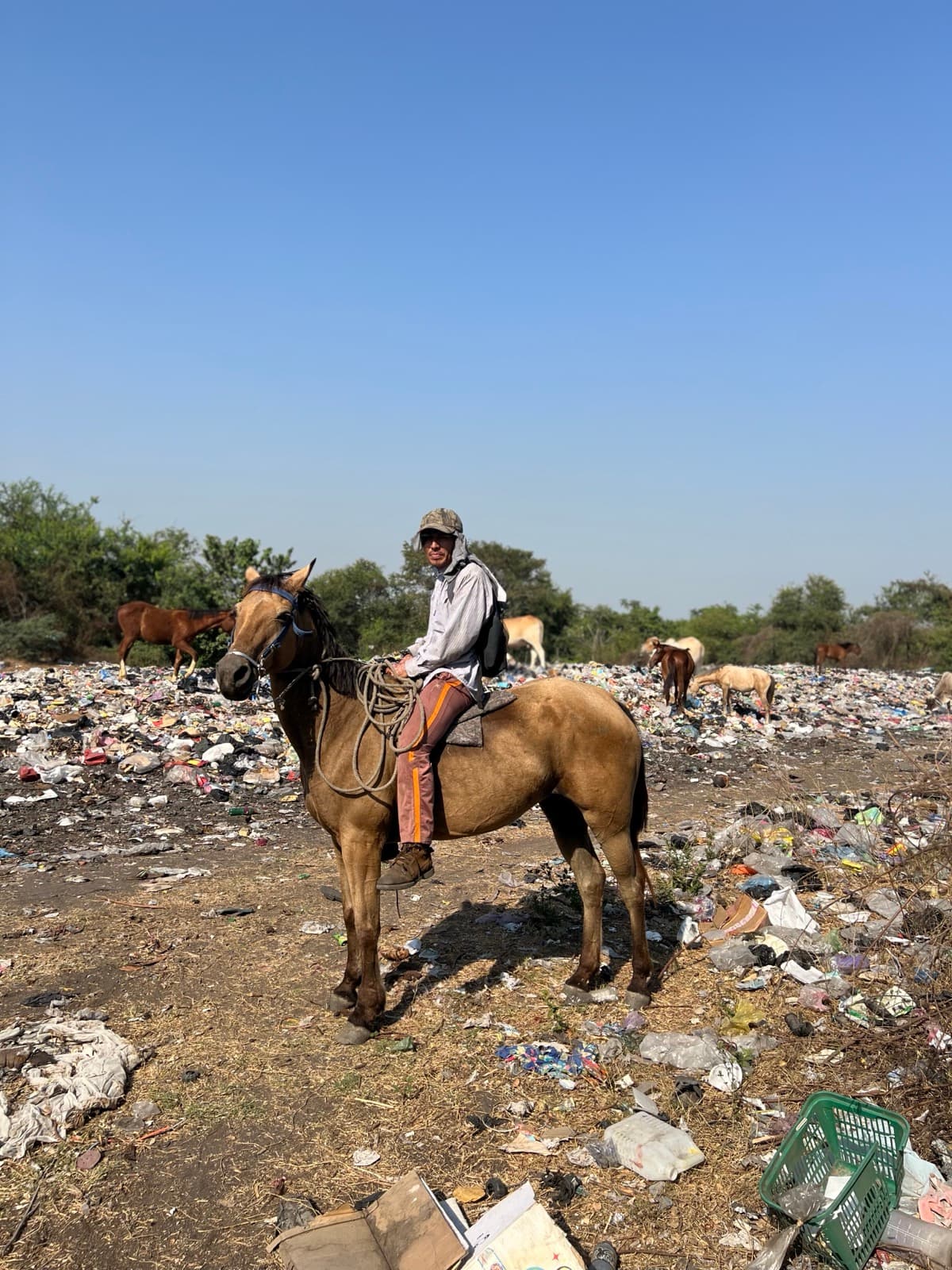
The economics of waste management in low-income communities rarely work in favor of containment. Without a formal collection system, residents face a narrow set of options: burning plastic in open pits, which releases toxic fumes including dioxins and furans, or disposing of waste near waterways where rain events wash it downstream. Neither option is a choice made from indifference. It is the only practical option available when collection trucks do not come and landfills are not accessible. In Guatemala, the majority of municipalities outside the capital lack formal waste collection services at all.
Once plastic enters the ocean, recovering it becomes orders of magnitude harder and more expensive. The physics explain why. A piece of plastic floating in a river is concentrated, moving in a predictable channel, and still close to where it entered the environment. Plastic in the open ocean disperses across millions of square kilometers, fragments into smaller pieces under ultraviolet radiation and wave action, and eventually sinks. Ocean Blue Project estimates that high-tech ocean cleanup systems can cost $10 to $20 per pound of plastic removed. Community-based river collection, by contrast, can operate at a fraction of that cost because it requires local labor rather than specialized vessels, and because it captures material before it has broken apart. Stopping plastic in a river is not a compromise solution. It is the more efficient intervention, on almost every cost and volume metric.
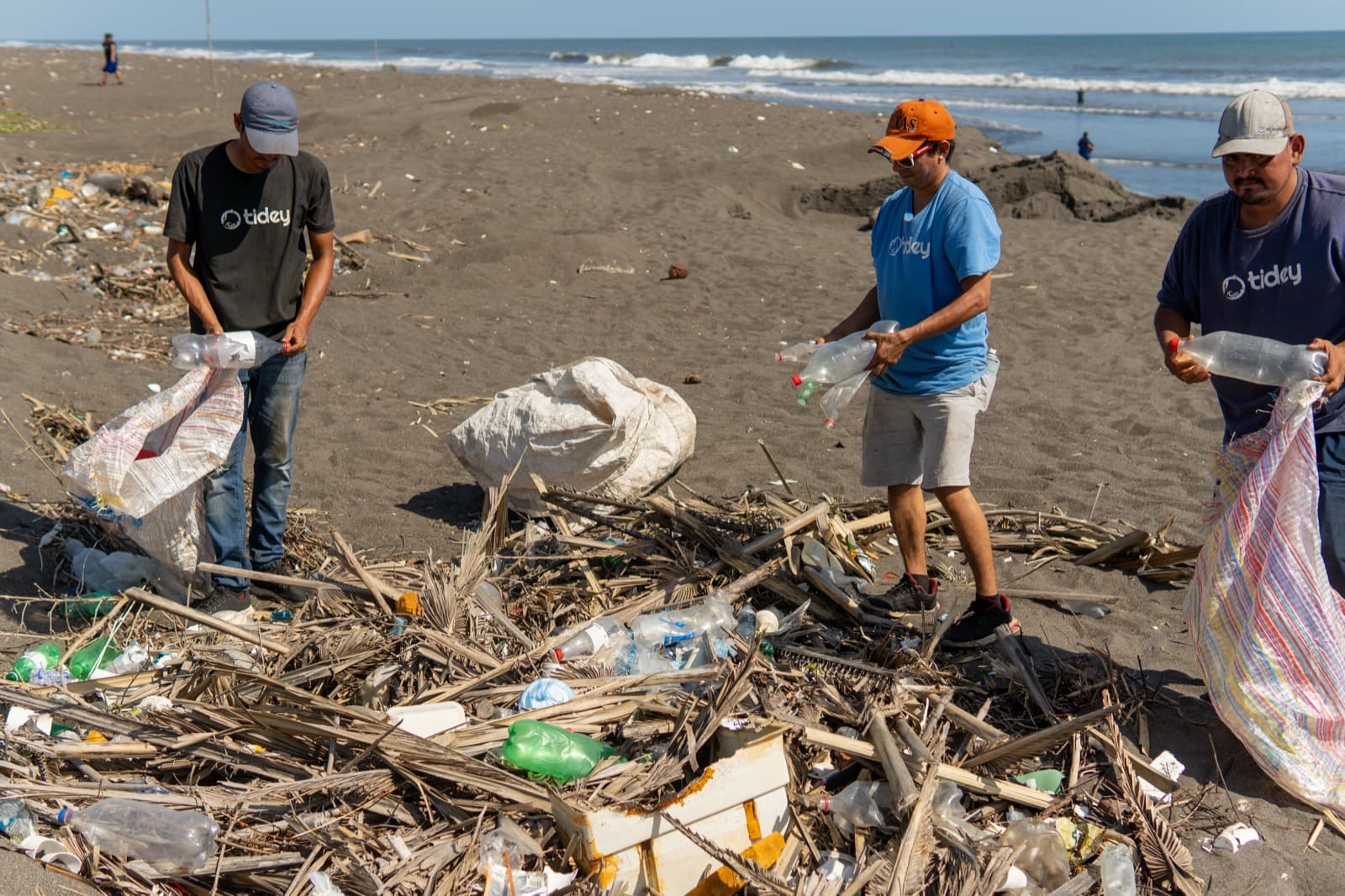
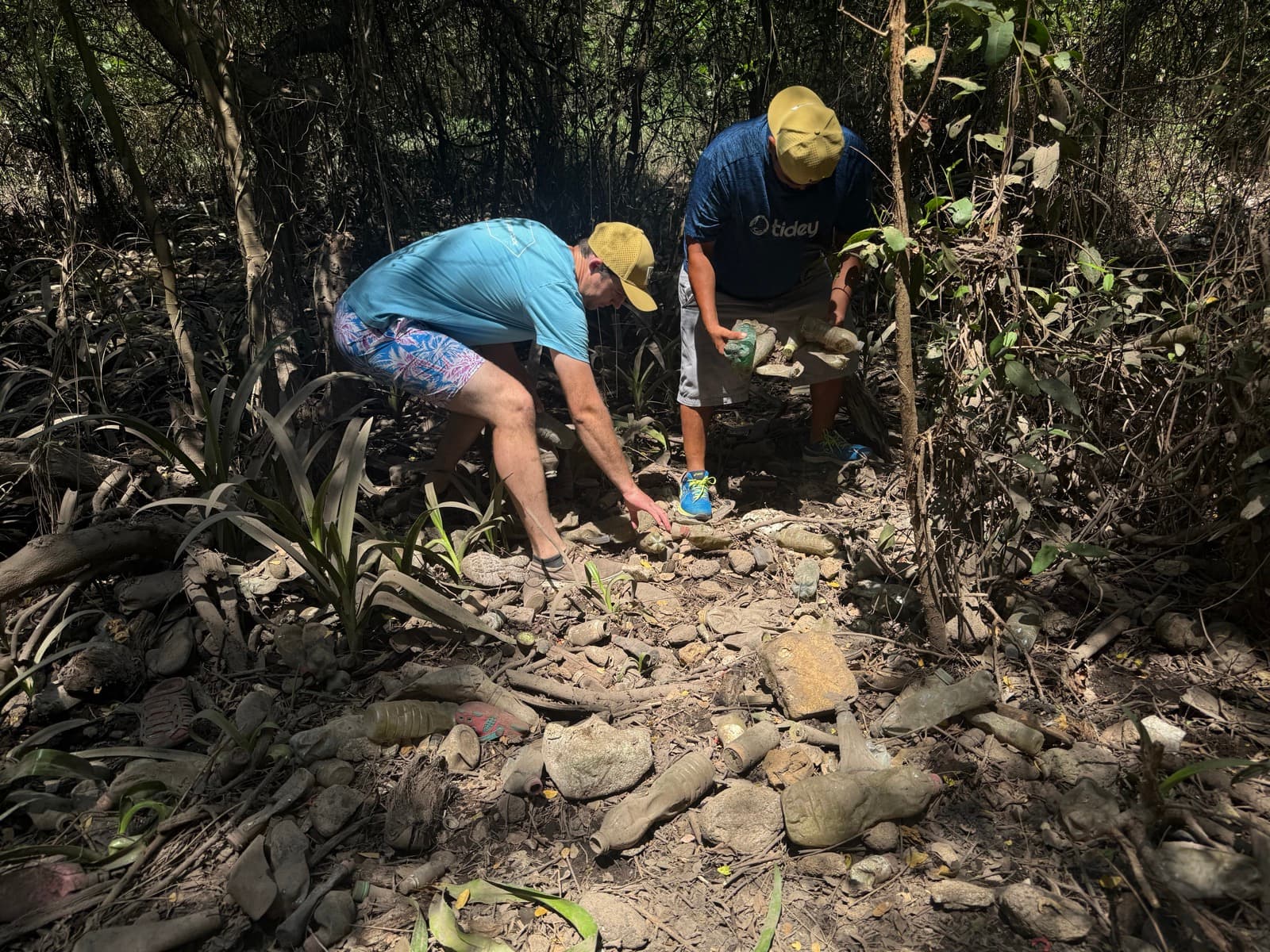
This is the logic behind source-based collection programs. Tidey Ocean operates collection hubs along the Maria Linda and Achiguate rivers in Guatemala, paying local collectors to remove plastic from river banks and mangrove zones before it enters the Pacific. Each pound removed at that point eliminates the need to attempt removal later in the ocean, where success rates are far lower. The operation uses BanQu's blockchain verification platform to record each collection event with location, date, and collector identity, creating a documented chain of custody from river bank to recycling facility.
The broader context for this kind of work is shifting. UNEP provided technical support to more than 30 countries in 2024 as they developed national plastic reduction regulations. The OECD projects that without significant policy change, globally mismanaged plastic waste could grow to 119 million tonnes per year by 2040. That projection is not fixed. It is the trajectory if current trends continue. Changing the trajectory requires intervening before plastic reaches water, not after.
Who is responsible for plastic in the ocean? Responsibility is distributed across the supply chain, from manufacturers who design single-use products with no viable end-of-life pathway, to governments that have not invested in waste infrastructure, to high-income nations that export their waste to countries without the capacity to handle it safely. Individual consumer choices matter, but the scale of the problem, hundreds of millions of tonnes per year, cannot be shifted by individual choices alone. The evidence consistently points toward upstream intervention: producer responsibility policies, waste infrastructure investment in high-mismanagement regions, and support for collection systems at river entry points.
Why do rivers carry so much plastic?
Most open dumpsites and informal waste areas are located near waterways because rivers have historically served as disposal systems in communities without formal trash collection. Rain events, especially in tropical regions, flush surface waste into channels rapidly. Research from Science Advances (Meijer et al., 2021) shows this dynamic plays out across more than 1,000 rivers worldwide, with small urban rivers in coastal cities among the highest emitters, not because they are larger, but because the density of mismanaged waste near their banks is higher.
Does recycling fix this problem?
Recycling is one part of a solution, but its current scale is far too small to offset production. UNEP reports that less than 9 percent of plastic ever produced has actually been recycled after accounting for losses in the collection and processing chain. Even optimistic recycling scenarios cannot absorb the current volume of plastic entering waste streams. The more direct lever is reducing how much mismanaged waste reaches waterways in the first place, through collection systems that intercept material before it enters rivers.
How does source collection in Guatemala compare to ocean cleanup?
The Maria Linda river offers a concrete example of the logic. Plastic removed from the river bank by a local collector in Guatemala never fragments into microplastics in the open ocean, never disperses across the Pacific, and never requires a specialized vessel to attempt recovery. The collector is paid for the work at the point of collection. The material is tracked, transported, and recycled. That complete chain, from collection through verification to recycling, runs at a cost per pound that no open-ocean retrieval system has matched at scale. It is not a replacement for ocean cleanup research, but for every pound of plastic stopped at the source, the ocean cleanup problem shrinks.
Sources
- UNEP. Plastic Pollution and Marine Litter. https://www.unep.org/topics/ocean-seas-and-coasts/ecosystem-degradation-pollution/plastic-pollution-and-marine-litter
- OECD. Global Plastics Outlook: Policy Scenarios to 2060 (2022). https://www.oecd.org/en/publications/global-plastics-outlook_aa1edf33-en/full-report.html
- Meijer, L.J.J. et al. More than 1000 rivers account for 80% of global riverine plastic emissions into the ocean. Science Advances 7, eaaz5803 (2021). https://doi.org/10.1126/sciadv.aaz5803
- The Ocean Cleanup. River plastic emissions source map. https://theoceancleanup.com/sources/
Monthly, from the field in Guatemala.
Collection numbers, new research on plastic and health, and what we are learning in the field. No more than once a month.