May 24, 2025 · by Tidey Ocean Foundation · updated June 11, 2026
Prevention Over Cleanup: The Math on Ocean Plastic
Ocean plastic cleanup costs orders of magnitude more than source interception. Here is what the current science says about stopping plastic at the source.
About 11 million metric tons of plastic enter the ocean every year, according to UNEP 2025 data. That is the equivalent of roughly 2,000 garbage trucks emptying into the sea every single day. Despite decades of cleanup campaigns and increasingly sophisticated recovery technology, that number is not falling. Understanding why requires looking at where the plastic comes from, how it moves, and what it costs to remove it at different points in its journey.
Nearly all ocean plastic originates on land. Researchers have identified rivers as the primary transport pathway, carrying plastic from inland communities to coastal waters. A 2023 study in Science of the Total Environment mapped country-specific riverine contributions to marine pollution and found that a relatively small number of countries account for the majority of emissions, most of them middle-income nations with fast-growing plastic consumption and underdeveloped waste collection infrastructure. Once plastic reaches the open ocean, physical and chemical degradation begins immediately, breaking larger pieces into fragments too small and too dispersed to recover efficiently.
The cost difference between removing plastic from the ocean and intercepting it at the source is not marginal. It is structural. The Ocean Cleanup, which operates some of the most advanced ocean recovery systems in the world, estimated in 2024 that cleaning the Great Pacific Garbage Patch would cost approximately $7.5 billion over a decade, targeting plastic that has already fragmented and spread across millions of square kilometers. A report from the Environmental Investigation Agency calculated that collecting 90 percent of the plastic entering the ocean annually through ocean-based systems alone would cost more than $10 billion per year. By contrast, community-based collection programs that intercept plastic in rivers or on riverbanks before it reaches the coast operate at a fraction of that cost per pound recovered, because the material is still concentrated and accessible.
The cost gap is wider still when recycling value is factored in. Plastic collected from riverbanks before it reaches open water is still structurally intact. It can be sorted, processed, and sold into recycling streams. Plastic that has spent months or years in the marine environment has degraded under UV radiation, wave action, and saltwater exposure, reducing its commercial recycling value significantly and often making it unviable for standard recycling entirely. Source collection is not just cheaper to execute. The material recovered has downstream value that partially offsets collection costs, while degraded ocean plastic typically has none.
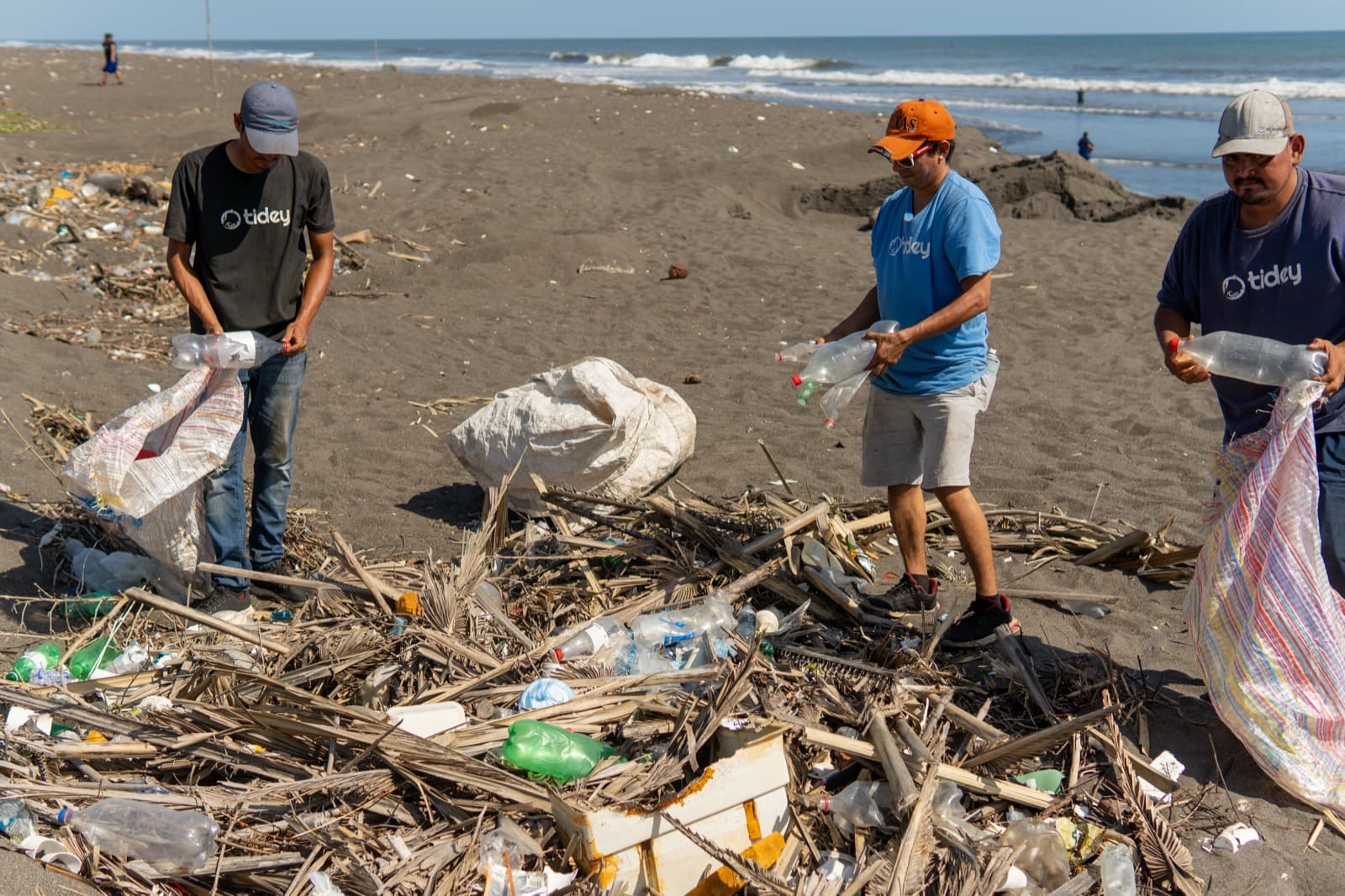
The Maria Linda and Achiguate rivers on Guatemala's Pacific coast illustrate the scale of the riverbank problem. The Ocean Cleanup's river emissions model estimates those two waterways alone carry roughly 3.3 million pounds of plastic into the Pacific every year. Plastic that has washed down to the riverbank but not yet reached open water can be collected by hand, sorted, and processed. Once it clears the river mouth, the same material becomes orders of magnitude harder and more expensive to recover, and its recycling window closes fast. The case for interception is both economic and practical.
This does not mean ocean cleanup is worthless. Legacy pollution, the plastic already in the water column and on the seafloor, poses ongoing ecological harm and will not remove itself. River interception programs cannot address what is already there. The evidence-based argument is not cleanup versus prevention but rather a question of where the next dollar of investment produces the most reduction in total ocean plastic load. On that question, the data consistently favor upstream intervention.
Systemic solutions operate at two levels. The first is waste infrastructure. In low- and middle-income countries where most ocean plastic originates, the core problem is not consumer behavior but the absence of collection systems. Plastic that has nowhere to go ends up in waterways. World Bank analyses have shown that investment in municipal solid waste collection in these regions produces measurable reductions in plastic leakage to the ocean. The second level is production-side policy. Extended producer responsibility, or EPR, is a regulatory framework that requires companies that manufacture and sell plastic packaging to fund its end-of-life management. The European Union's EPR schemes currently support over 300,000 jobs in the recycling sector, according to the World Economic Forum, and countries with functioning EPR systems see lower rates of plastic leakage. The Philippines enacted EPR legislation in 2022 requiring producers to take responsibility for an escalating percentage of their plastic footprint, reaching 80 percent by 2028.
Global treaty negotiations have stalled. As of August 2025, the fifth session of the UN's Intergovernmental Negotiating Committee on plastic pollution adjourned without consensus, with roughly 100 nations supporting binding production caps and bans on harmful products, while major oil-producing countries and the United States opposed production limits. A follow-up session is planned but no firm date has been set. The gap between what the science supports and what the treaty process has produced so far is significant.
What does Tidey Ocean do about this?
We operate collection programs along the Maria Linda and Achiguate rivers in Guatemala, where we can remove plastic before it clears the river mouth. Every collection day is paid work for local collectors, and every pound recovered at this stage costs a small fraction of what the same pound would cost to recover from open water. That is not a claim about solving the problem in full. It is a recognition that working at the point of maximum cost-efficiency is how limited nonprofit resources produce the most measurable reduction in ocean plastic load.
Does cleanup technology like The Ocean Cleanup make sense?
Yes, for legacy plastic already in the ocean, particularly large debris that poses acute hazards to marine life. The argument against focusing exclusively on ocean-based recovery is not that the technology does not work. It is that recovery alone cannot keep pace with 11 million metric tons of new input per year. If the input rate stays constant, the most sophisticated cleanup systems in the world would be running to stand still.
Will EPR policies actually change anything?
The evidence from existing programs suggests yes, with conditions. EPR works when enforcement mechanisms are strong and fees are set high enough to fund real infrastructure rather than symbolic compliance. When designed correctly, they create a direct financial incentive for producers to reduce the amount of plastic they put into circulation, because every ton of packaging they sell creates a corresponding liability for end-of-life management costs. Weak EPR with low fees and no enforcement, by contrast, produces paperwork without reducing leakage.
How can individuals make the most difference?
Individual consumption choices matter less than collective political pressure on waste infrastructure investment and producer accountability. That does not mean personal choices are irrelevant, but the scale of the problem is beyond what individual behavior change can address. Supporting organizations that operate at the source interception level, and advocating for EPR legislation and municipal waste investment in the regions where ocean plastic originates, is where the evidence points for maximum impact per unit of effort.
Sources
- UNEP. Plastic Pollution and Marine Litter. https://www.unep.org/topics/ocean-seas-and-coasts/ecosystem-degradation-pollution/plastic-pollution-and-marine-litter
- OECD. Global Plastics Outlook: Policy Scenarios to 2060 (2022). https://www.oecd.org/en/publications/global-plastics-outlook_aa1edf33-en/full-report.html
- Meijer, L.J.J. et al. More than 1000 rivers account for 80% of global riverine plastic emissions into the ocean. Science Advances 7, eaaz5803 (2021). https://doi.org/10.1126/sciadv.aaz5803
- The Ocean Cleanup. River plastic emissions source map. https://theoceancleanup.com/sources/
Monthly, from the field in Guatemala.
Collection numbers, new research on plastic and health, and what we are learning in the field. No more than once a month.