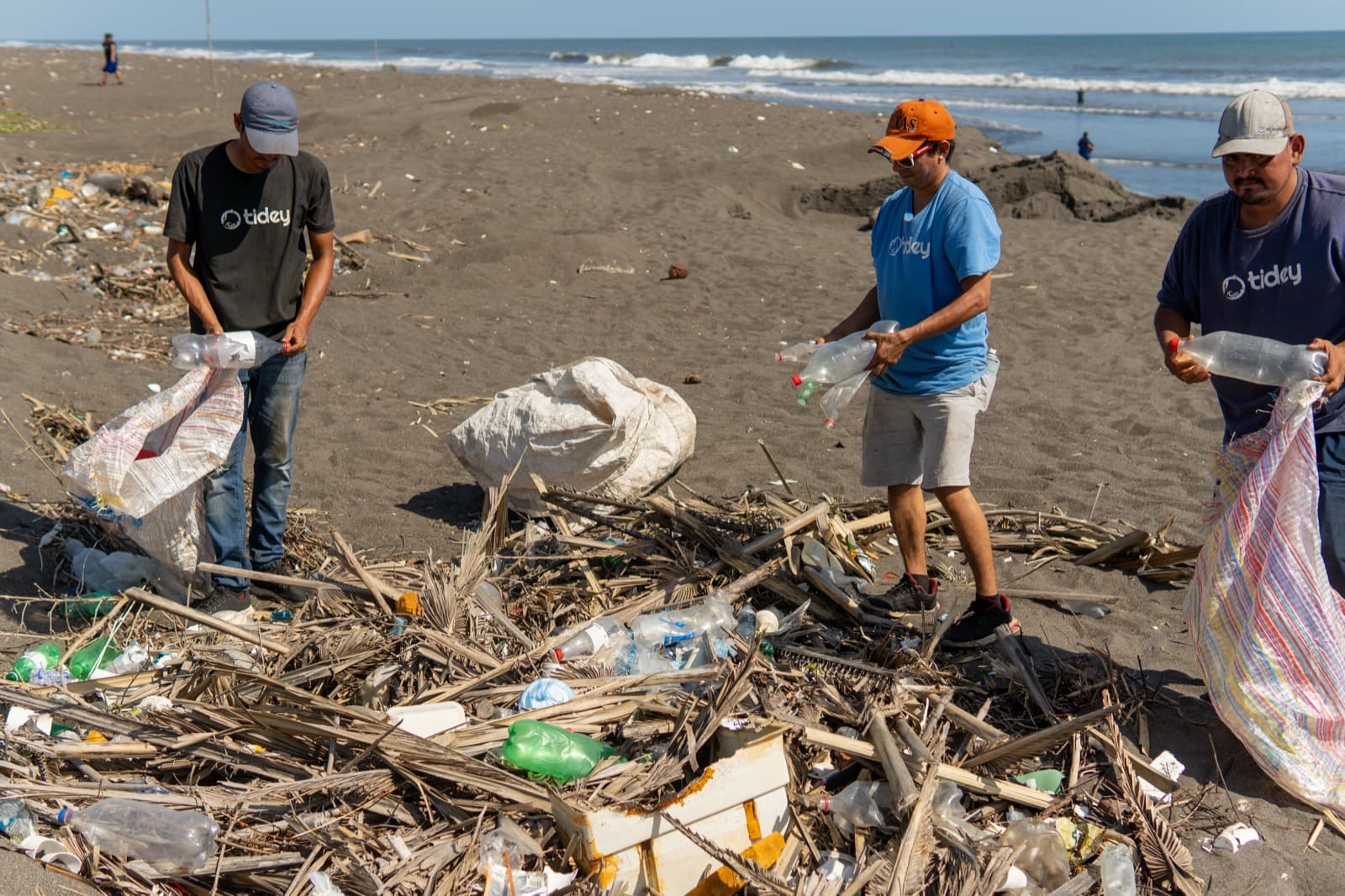
May 25, 2025 · by Tidey Ocean Foundation · updated June 11, 2026
From Tap Water to Takeout: How Microplastics Enter the Body and What to Do About Each
Seven documented exposure routes for microplastics, with the specific research behind each and practical steps to reduce exposure at each pathway.
Researchers have confirmed microplastics in human blood, lung tissue, brain tissue, placenta, and breast milk. The question is no longer whether exposure is happening but which routes are largest, how well-characterized the evidence is for each, and what can realistically be done about them. This post covers seven specific pathways, ranked roughly by how well the evidence is developed and how much exposure each route likely represents.
Drinking water is the most thoroughly studied route and, for bottled water specifically, one of the highest documented sources. A January 2024 study published in the Proceedings of the National Academy of Sciences by researchers at Columbia University and Rutgers University used improved laser-based detection to find approximately 240,000 plastic particles per liter in bottled water, with roughly 90 percent classified as nanoplastics, particles under one micrometer in size. Earlier studies using older detection technology had reported averages around 325 microplastic particles per liter, a figure that dramatically understated actual counts because it could not detect nanoplastics. Tap water also contains microplastics, but at concentrations consistently lower than bottled water in most studies, suggesting the plastic bottle itself is a significant source of contamination. Point-of-use filters certified to NSF Standard 58, including reverse osmosis systems and certain activated carbon block filters, reduce but do not eliminate microplastic and nanoplastic content in drinking water.
Synthetic textile washing is the largest environmental source of microplastics entering waterways, according to UNEP, though the direct personal health exposure through this route is harder to quantify. UNEP estimates that washing synthetic clothing releases approximately 500,000 tonnes of microfibers into wastewater systems globally each year, equivalent in plastic mass to roughly 50 billion plastic bottles. A single laundry load can release up to 700,000 individual fibers depending on fabric type, machine type, water temperature, and cycle length. Most wastewater treatment plants remove a significant share of these fibers, but the fraction that escapes goes directly to rivers. Indoor air in homes contains synthetic microplastic fibers shed from synthetic clothing, upholstery, and carpets during everyday use. Microfiber filter bags designed for washing machines capture a portion of fibers before they enter wastewater. Washing on cold, shorter cycles reduces fiber release. Natural fiber textiles, cotton, wool, linen, and silk, do not shed synthetic microplastics.
Food and beverage packaging is a route whose magnitude depends heavily on how the packaging is used. Plastic containers, beverage cups lined with polyethylene, and food wrappers release plastic particles when they contact hot, acidic, or fatty food. Rate of particle release increases substantially with temperature. Hot coffee in a polyethylene-lined paper cup exposes the drinker to particles from the liner; the same cup with a cold drink releases far fewer. Microwaving food in plastic containers substantially accelerates both particle migration and migration of plastic additives including plasticizers into the food. Switching to glass, ceramic, or stainless steel for hot food storage and preparation eliminates this pathway.
Seafood is a well-documented route with a long research history. Shellfish, including oysters, mussels, clams, and scallops, are filter feeders that concentrate microplastics from seawater in their tissues. Because shellfish are commonly consumed whole including gut contents, ingested particles transfer to human consumers. A 2019 study in Environmental Science and Technology estimated that regular shellfish consumers ingest up to 11,000 microplastics per year through seafood. Fish accumulate microplastics primarily in the digestive tract, and gutted fish carry substantially lower microplastic loads than shellfish eaten whole. The health consequences of consuming microplastics through normal dietary seafood quantities are still being studied; confirmed detection is ahead of confirmed health effect research for this specific route.
Personal care products were a significant source before regulatory action in multiple countries. The US Microbead-Free Waters Act of 2015 banned microbeads, small manufactured plastic beads used as exfoliants, from rinse-off cosmetics. Canada and the European Union enacted similar bans. Products formulated before those bans may still be in circulation in some markets. Consumers in countries without these bans should check ingredients lists of exfoliants and toothpastes for polyethylene, polypropylene, polymethyl methacrylate, and nylon-12. In countries with existing bans, this pathway from intentionally manufactured microplastics has been largely closed.
Indoor air is a route that receives less attention but is consistent across studies. Airborne microplastic particles have been found in every indoor air sample tested in published research. Sources include synthetic textiles and upholstery shedding during everyday movement and use, degrading plastic household items, and outdoor air microplastics entering through ventilation. HEPA filtration reduces indoor airborne particle concentrations. The significance of this route relative to dietary ingestion for human tissue accumulation has not been definitively established, but the finding of microplastics in human lung tissue in multiple studies, including research published in Science of the Total Environment, confirms that inhalation is a real exposure pathway.
Takeout containers and single-use food service items represent the final documented route. Polystyrene foam containers used for hot food leach styrene into food contents: the US EPA lists styrene as a possible human carcinogen. Polypropylene lids and cups used for hot beverages have been shown in multiple studies to release millions of plastic particles into hot liquids. A 2021 study in the Journal of Hazardous Materials found that a single disposable polypropylene cup filled with hot water released approximately 25,000 particles in 15 minutes. Bringing a reusable cup or container eliminates this exposure pathway for the food it contacts.
The honest summary of all seven routes is that complete elimination of microplastic exposure is not currently possible because microplastics are present throughout the environment, including in the air, water, and food supply. Meaningful reduction across multiple pathways simultaneously is possible: filtered water instead of bottled water, natural fiber textiles, hot food in non-plastic containers, and reduced takeout use each address real exposure routes with practical substitutions. The larger issue, that global plastic production continues to increase and environmental microplastic concentrations rise with it, cannot be resolved by individual choices alone. Source reduction at the production level is the only intervention that changes the baseline.
Sources
- Nihart, A.J. et al. Bioaccumulation of microplastics in decedent human brains. Nature Medicine 31, 1114–1119 (2025). https://doi.org/10.1038/s41591-024-03453-1
- World Health Organization. Microplastics in drinking-water (2019). https://www.who.int/publications/i/item/9789241516198
Monthly, from the field in Guatemala.
Collection numbers, new research on plastic and health, and what we are learning in the field. No more than once a month.